
 Available in GB
Content
- A Sizeable Slot Library and No Published RTP: What That Means for Players
- RTP Benchmarks: Love Casino Slots vs Industry Standard 96%
- Megaways Mechanics: How 40% of Love Casino Slots Use Variable Reels
- Software Providers: Pragmatic Play, NetEnt, Play'n GO, and Beyond
- The £5 Stake Limit and How It Reshapes Slot Sessions
- Table Games and Live Dealer Options at Love Casino
- Frequently Asked Questions
- In-depth guides in this section
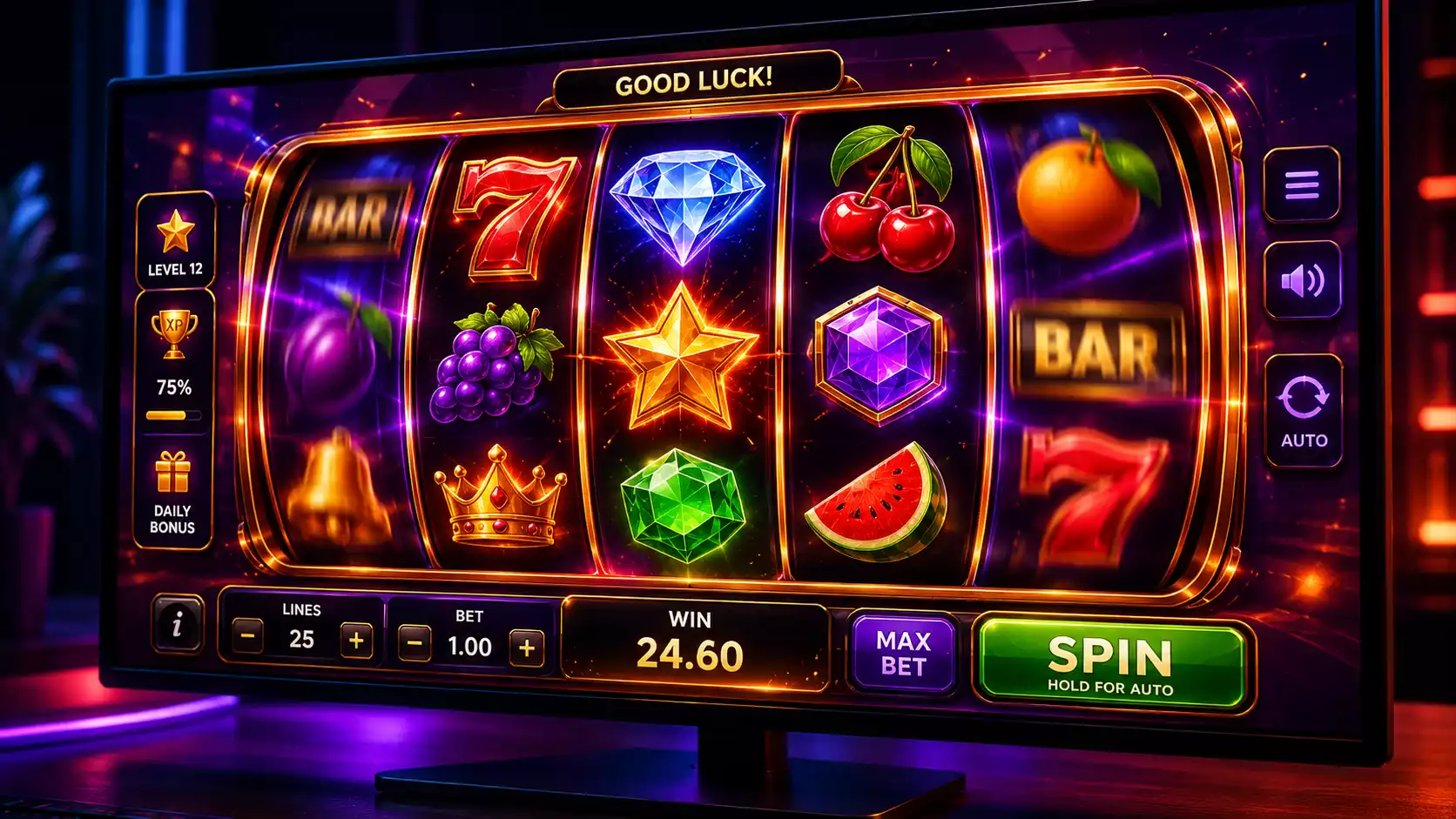
A Sizeable Slot Library and No Published RTP: What That Means for Players
The first thing I did when I started reviewing Love Casino’s game library was search for a published RTP list. At any UKGC-licensed operator, you can find return-to-player percentages for every slot either on the game information page, in the help section, or in a dedicated RTP document. At Love Casino, I found nothing. Twelve thousand slots, and not a single publicly accessible RTP figure verified by the operator.
That absence tells you something important. The average RTP for online slots across the industry sits at approximately 96% — meaning that for every £100 wagered, the theoretical return to the player is £96, with £4 retained by the operator as gross gambling yield. But 96% is an average. Individual slots range from below 90% to above 99%. The difference between a 92% and a 98% slot, compounded over hundreds of spins, is the difference between rapid balance depletion and extended play. Without published RTP data, a player at Love Casino is choosing games blind — selecting based on theme, branding, and visual appeal rather than the mathematical characteristic that most directly determines the cost of play.
UKGC-licensed operators are required to make game RTP information available to players. This is not just a transparency nicety — it is a regulatory condition tied to the principle that players should be able to make informed decisions. The Gambling Commission’s position is clear: concealing the cost of play undermines player protection. Offshore operators face no equivalent requirement, and many — Love Casino included — do not voluntarily publish this data.
The slot-library headcount also warrants scrutiny. Independent reviewers put Love Casino’s library between 1,000 and 3,500 titles — already at the upper end of what offshore operators typically publish. For context, the largest UKGC-licensed operators typically offer between 1,000 and 3,000 slots. A library of 12,000 titles suggests either aggregation from a very large number of providers (including smaller, less established studios) or inclusion of multiple variants and reskins of the same base games. Neither explanation is problematic on its own, but both have implications for average quality and RTP consistency across the catalogue. When I audit a casino’s slot library, I look at provider diversity, RTP distribution, and the proportion of games from studios I can independently verify. At Love Casino, the first two metrics are impossible to assess without published data.

Who supplies them: the software providers.
RTP Benchmarks: Love Casino Slots vs Industry Standard 96%
Every conversation I have about slot selection eventually comes back to one number: 96. That is the industry standard average RTP for online slots, and understanding what it means — and does not mean — is essential for evaluating any casino’s game library.
Return to player is a theoretical percentage calculated over millions of simulated spins. A slot with 96% RTP will, over its lifetime, return £96 for every £100 wagered. The remaining £4 is the house edge — the operator’s margin. Over a session of 200 spins at £1 per spin, the expected loss is £8. Over 1,000 spins, it is £40. The maths is linear and relentless.
But RTP is not a guarantee of session outcomes. A 96% RTP slot can produce sessions where the player loses 40% of their balance and sessions where they triple it. That variance — commonly called volatility — determines the distribution of outcomes around the theoretical average. High-volatility slots produce more extreme swings: longer losing streaks interrupted by larger wins. Low-volatility slots produce more consistent returns closer to the theoretical average. The RTP tells you the long-run cost. The volatility tells you what the ride feels like.
Online slots at 96% average RTP represent a significantly better mathematical proposition than retail casino slots, which typically return 88% to 94%. That gap is one reason online gambling has grown so rapidly — players get more play per pound online. But within the online sector, the spread is wide. Top-performing titles like Book of 99 at 99% RTP and Mega Joker at 99% RTP sit at the extreme high end. These are outliers. The median slot at a well-stocked casino sits between 95% and 96.5%.
At Love Casino, without published RTP data, the player cannot determine where the library’s average sits relative to the 96% benchmark. There is a specific reason this matters for offshore operators: some game providers offer configurable RTP settings. A provider might make the same slot available at 96.5%, 94.5%, or 92% RTP, with the operator choosing which version to deploy. UKGC regulations require operators to publish the actual RTP being offered, preventing them from silently deploying lower-RTP versions. No equivalent requirement exists under Curaçao licensing. An offshore operator could deploy every slot at its lowest available RTP setting, and the player would have no way to know without independent testing.
I am not suggesting Love Casino does this. I am pointing out that the absence of published RTP data, combined with the absence of a regulatory requirement to publish it, creates a trust gap. At a UKGC operator, I can verify the claimed RTP against independent audit data. At Love Casino, I am relying on the operator’s good faith — and good faith is not a verification method.
For any player evaluating slot options, my standard recommendation is straightforward: play at operators that publish audited RTP data for every game. If that data is not available, assume the operator has deployed the lowest available RTP configuration until proven otherwise. The difference between 96% and 93% RTP may not sound significant, but over 10,000 spins at £1 each, it is the difference between an expected loss of £400 and £700. That is real money, and it is money you are spending without knowing you are spending it.
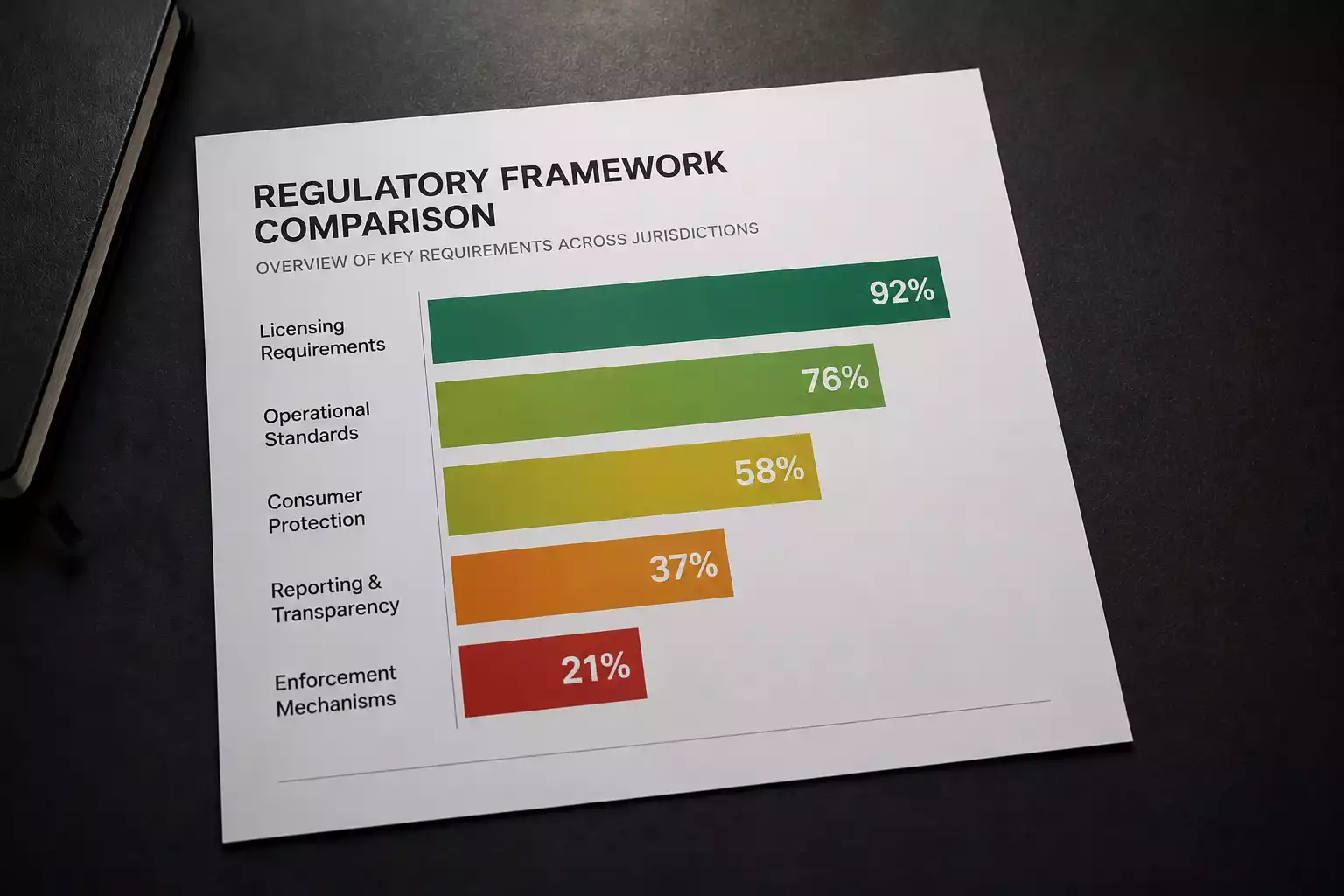
Online 96% vs Retail 88–94%: Why the Channel Matters
The 96% online slot average is not a universal benchmark — it is the online benchmark specifically. Retail slot RTPs in UK adult gaming centres and bookmakers are typically set in the 88–94% range, with the lowest rates appearing on the highest-volume cabinets. The gap is structural: an online operator’s marginal cost on each spin is close to zero, so the competitive equilibrium has moved toward higher return rates as a player-acquisition lever. Land-based operators carry estate, staff and licensing costs that the online RTP simply does not have to absorb.
That channel difference matters when reading reviewer comparisons. An offshore casino quoting “industry-standard 96% RTP” is comparing itself to the online benchmark; the same number quoted in a retail context would be exceptional. For a player crossing between channels, the RTP variance can be 4–8 percentage points without any change in the underlying provider or game.
How to Check if a Casino’s RTP Claims Are Audited
Three audit signals separate a verifiable RTP claim from marketing prose. The first is the name of the testing house: eCOGRA, GLI (Gaming Laboratories International), iTech Labs and BMM Testlabs are the four bodies whose certifications appear at most legitimately-audited operators. A certificate from one of these labs is referenced by date and game; the absence of any named lab is the first signal that the RTP figure is the provider’s claim, not an independently audited measurement.
The second signal is the per-game disclosure pattern. Audited operators publish RTP per title — not as a site-wide average. A site-wide RTP figure averaged across the library is internally consistent with the provider’s published per-game RTPs at a UK-licensed operator; at an offshore brand it can mask wide divergence between individual titles. The third signal is whether the RTP figure is described as “theoretical” (the provider’s certified rate, before configuration), “actual” (the measured rate from the operator’s logged play data), or simply “RTP” (often the headline figure without specifying which).
Love Casino does not prominently publish per-game RTP, and independent inspection of its game tiles does not surface theoretical-vs-actual distinctions. That is not in itself evidence of manipulation — Curaçao’s licensing framework does not require the disclosure granularity the UKGC mandates — but it does mean the RTP claims a player encounters on the site cannot be independently verified through the audit-signal route.
For deeper coverage of the underlying maths, see the volatility analysis at game volatility and variance, and the bonus-side interaction in wagering requirements.
House Edge: The Other Way to Read RTP
RTP expressed from the player’s side is the inverse of the operator’s house edge. A 96% RTP slot has a 4% house edge — the operator’s mathematical expectation across the life of the game, before bonusing, before variance. The house edge framing is more honest in one respect: it makes clear that the per-spin expectation is negative for the player, and that the only path to a positive outcome is the variance distribution that sits on top of that expectation.
House edges across the casino floor are not equal. Online slots cluster at 2–7%; UK retail slot machines run higher, typically 6–12%. Among table games, single-zero (European) roulette carries a 2.7% edge against a player betting straight up or on even-money outcomes; double-zero (American) roulette doubles that to 5.26%; baccarat banker bet sits at 1.06%; blackjack played with optimal basic strategy comes in near 0.5% on a six-deck shoe with liberal rules. The category mix at any given casino, including Love Casino, materially affects the player’s expected hold rate.
Theoretical RTP vs Actual Payout: What the Distinction Means in Practice
The theoretical RTP is the certified rate the game’s underlying mathematical model produces over an infinite play sample. The actual payout is the realised payout rate from a specific play sample over a specific period. The two converge over very large samples — millions of spins — and diverge meaningfully over the sample size a typical player produces. A player whose lifetime spin count on a single title is a few thousand spins is observing a sample where the gap between theoretical and actual can be wide in either direction.
For operators that publish both, the gap between theoretical and actual on the same title is a useful integrity signal. Persistent actual-below-theoretical on a high-volume game suggests configuration questions; persistent actual-above-theoretical may suggest reporting questions. Love Casino does not publish actual-payout rates in a form that allows the comparison.
Why Published RTPs Cannot Always Be Trusted at Offshore Brands
Three structural factors limit the trust a player can place in a published RTP at an offshore casino. The first is configuration flexibility: many slot providers ship games with multiple RTP variants (e.g., 96.5%, 94.2%, 92.0%) and the operator selects which variant to deploy. Without disclosure of the deployed variant, the headline RTP a reviewer cites and the actual configured RTP on a player’s screen need not be the same number. The second is the lack of mandated per-game audit certificates at the Curaçao Gaming Authority level — a structural absence rather than an operator-specific shortcoming. The third is the absence of post-deployment monitoring: UKGC operators have an ongoing obligation to report RTP-related anomalies; the CGA framework’s enforcement on this point is less prescriptive.
None of this makes offshore RTPs categorically untrustworthy. It does mean the player carries more verification burden than a UK-licensed equivalent — and that “industry-standard 96% RTP” claims at offshore brands should be read as marketing assertions rather than audited measurements.
Megaways Mechanics: How 40% of Love Casino Slots Use Variable Reels
Walk into any online casino lobby today and the word “Megaways” appears everywhere. At Love Casino, approximately 40% of the slot library uses the Megaways mechanic — a proportion that is higher than most operators I have reviewed. Understanding why requires understanding what Megaways actually does to the game mathematics.
Megaways is a variable-reel mechanic originally developed by Big Time Gaming and licensed to other providers. In a traditional slot, each reel displays a fixed number of symbols per spin — typically three or five. The number of possible winning combinations is fixed. In a Megaways slot, the number of symbols displayed on each reel changes with every spin, typically between two and seven. A six-reel Megaways slot can produce up to 117,649 ways to win on a single spin. The next spin might produce only a few hundred.
This variable structure dramatically increases volatility. The maximum win potential is higher because the maximum number of active paylines is much larger. But the average spin also has a much wider range of possible outcomes. A player on a Megaways slot experiences longer stretches between significant wins, punctuated by larger payouts when the reel configurations align. The RTP can be identical to a traditional slot — the mechanic changes the distribution of returns, not necessarily the long-run average.
The 40% Megaways share in Love Casino’s library is notable because Megaways titles tend to be among the most engaging and highest-volatility games available. For the operator, high-volatility games are commercially advantageous — they produce more extreme session outcomes, which means more players either bust quickly or hit memorable wins that generate positive word-of-mouth. UK online slot GGY reached £746.5 million in Q2 2025/26, a 9% increase year-on-year, with 24.4 billion spins recorded. Megaways titles contribute disproportionately to that volume because their mechanics encourage extended play.
For players, a library skewed towards Megaways means a library skewed towards volatility. If you prefer consistent, predictable returns per session, a 40% Megaways library requires careful game selection to avoid the highest-variance titles. If you enjoy the adrenaline of volatile play, the selection is extensive. Neither preference is wrong — but the choice should be conscious, not accidental. And at an operator that does not publish individual game RTP, you are navigating that volatility without a map.

Software Providers: Pragmatic Play, NetEnt, Play’n GO, and Beyond
I evaluate game providers the way a restaurant critic evaluates ingredient suppliers — the quality of the raw material determines the ceiling of the final product. Love Casino lists Pragmatic Play, NetEnt, and Play’n GO among its providers. Those are three of the most recognised names in the slot development industry. Their presence in an operator’s library is generally a positive signal, but it comes with caveats at offshore operators.
Pragmatic Play is one of the most prolific slot developers in the market, releasing new titles at a pace that few competitors match. Their games are known for consistent production quality, strong feature mechanics, and competitive RTP ranges. NetEnt, now part of the Evolution Gaming group, built its reputation on visually distinctive slots with transparent mathematical models. Play’n GO is the studio behind some of the most widely played titles in iGaming history, with a portfolio that spans low-volatility classics and high-volatility feature-rich games.
The question at an offshore operator is whether these providers have directly licensed their content to the operator, or whether the games are accessed through an aggregator platform that may or may not have authorisation from the original provider. Tier-one game providers have increasingly tightened their distribution policies, restricting access to operators in jurisdictions they consider high-risk. Some providers have publicly withdrawn from certain markets. Others maintain a more permissive approach, allowing aggregators to distribute their content to operators they would not directly contract with.
For the player, the distinction matters because games accessed through unauthorised aggregation may not be running on the provider’s own servers. If a Pragmatic Play slot runs on a third-party server rather than Pragmatic’s own infrastructure, the RTP configuration, random number generation, and payout processing may differ from what the provider intended. The game looks identical — same graphics, same sounds, same feature triggers — but the underlying mathematics could be different. This is an industry-wide concern in the offshore sector, not a claim specific to Love Casino, but it is a concern that players should be aware of.
Beyond the headline providers, Love Casino’s library of 12,000 titles necessarily includes games from smaller studios that are harder to verify independently. Some of these studios produce quality games with audited RTP data. Others operate with minimal regulatory oversight and limited independent testing. The diversity of providers in a large library is a double-edged sword: more choice for the player, but also more variability in game integrity and verification standards. When I cannot confirm a provider’s licensing status or audit history, I flag those games as unverified and recommend players stick to titles from studios whose credentials they can independently confirm.

The £5 Stake Limit and How It Reshapes Slot Sessions
I remember the day the announcement dropped. Every analyst I knew had the same first reaction: this changes everything about how sessions play out. Since April 2025, the UK Gambling Commission has enforced a £5 maximum stake for online slots across all adult players, with a stricter £2 cap for anyone aged 18 to 24. These are not guidelines or recommendations — they are regulatory limits that every UKGC-licensed operator must enforce.
The impact has been measurable and swift. Sessions lasting longer than one hour on online slots fell by 16% in Q3 2025/26, and the average session length dropped by two minutes to 16 minutes. That might sound modest, but across millions of daily sessions, those two minutes represent a significant reduction in player exposure to continuous gambling. The stake limits achieved exactly what regulators intended: they slowed the rate of loss per session without banning the activity itself.
Here is how the maths works in practice. Before the cap, a player spinning at £10 per spin on a high-volatility slot with a five-second spin cycle would wager £120 per minute — £7,200 per hour. At 96% RTP, the expected hourly loss was £288. Under the £5 cap, that same player at the same spin rate now wagers £60 per minute — £3,600 per hour — with an expected hourly loss of £144. The cap halved the maximum burn rate. For 18-to-24-year-olds at the £2 limit, the maximum hourly wager drops to £1,440, with an expected loss of £57.60. These numbers assume continuous play at maximum stake, which is the worst-case scenario the regulation was designed to address.
Love Casino, operating under a Curaçao licence, is not bound by these limits. A player on this platform can still place £20, £50, or £100 per spin if the slot allows it. That creates a specific risk: UK players who have become accustomed to the pacing enforced by UKGC stake limits may encounter dramatically faster loss rates when playing at offshore operators without those protections. The transition from £5 maximum to unlimited staking is not just a numerical difference — it is a fundamentally different speed of play.
The £5 limit also interacts with volatility in ways that alter game selection. On high-volatility Megaways slots, a £5 cap means the maximum single-spin win is proportionally reduced. Jackpot chasers who previously relied on large stakes to produce life-changing payouts find the ceiling substantially lower. Some players have migrated to table games, where stake limits are structured differently. Others have looked offshore — which is precisely the migration pattern that regulators have acknowledged as a side effect of tighter domestic controls.
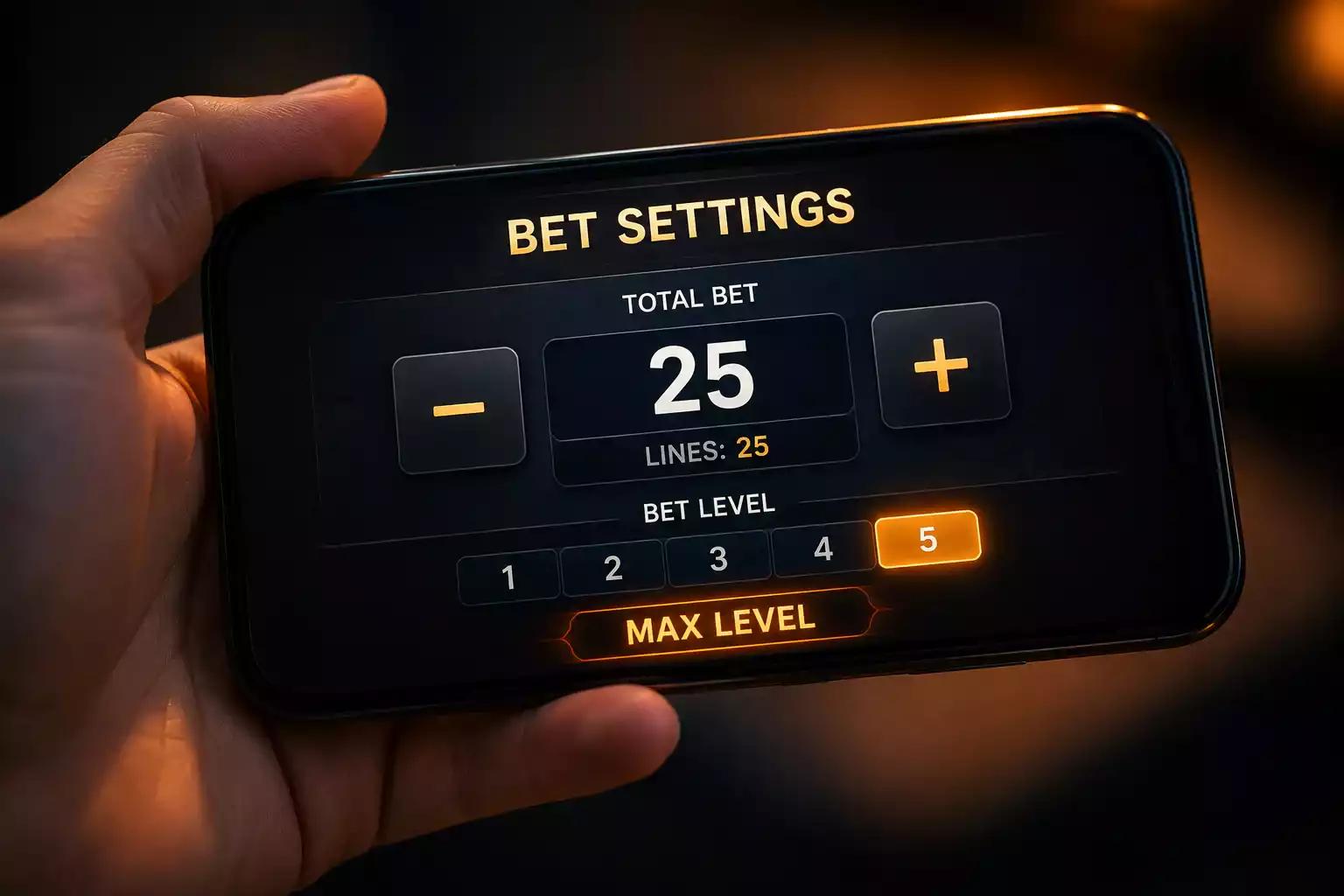
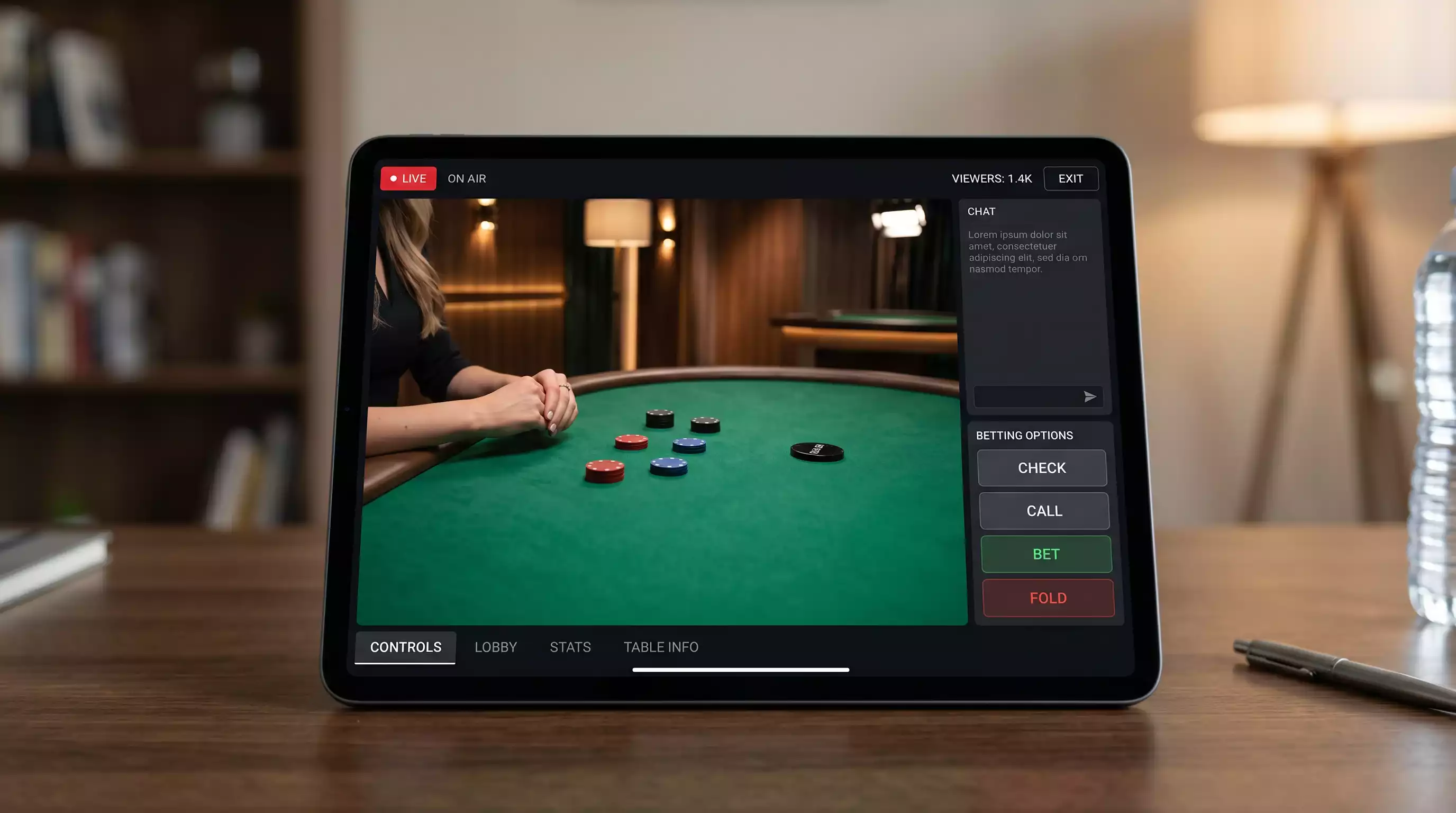
Table Games and Live Dealer Options at Love Casino
Slots dominate every online casino’s revenue, but the players I find most interesting are the ones who split their time between slots and the table. Love Casino offers both traditional RNG table games — digital versions of blackjack, roulette, baccarat, and poker variants — and a live dealer section powered by third-party streaming providers. The distinction between those two categories matters more than most players realise.
RNG table games use a random number generator to determine outcomes. Each hand of blackjack, each spin of the roulette wheel, is a software event calculated by an algorithm and verified by the game provider’s audit process. The house edge on these games is well-documented and consistent: blackjack with basic strategy returns approximately 99.5%, European roulette 97.3%, baccarat 98.9% on banker bets. These are better mathematical propositions than most slots, and the RTP does not vary between operators because the game rules are standardised. A digital blackjack hand deals the same probabilities regardless of where you play it.
Live dealer games are a different product entirely. A human dealer operates physical cards or a real wheel, streamed to the player’s device via video. The shape of the shift is widely recognised across industry analysis: mobile is already the present, not just the future — traditional casino patterns were session-based, but mobile has created micro-sessions throughout the day. That observation applies directly to live dealer sessions at Love Casino, where players increasingly access streamed table games during commutes, lunch breaks, and other fragmentary windows.
The quality of a live dealer experience depends on the streaming provider. Evolution Gaming is the industry standard, powering live dealer content for the majority of top-tier operators globally. Love Casino’s live section appears to use content from multiple providers, though confirming the specific partnerships without official disclosure from the operator is difficult. What I can assess is the stream quality, dealer professionalism, and game variety — all of which fall within the range I have seen at comparable offshore operators.
One practical consideration for table game players at offshore operators: dispute resolution. If a live dealer hand produces a disputed result — a perceived misread, a technical glitch during a hand, a disconnection at a critical moment — the player’s recourse depends entirely on the operator’s internal complaints process. At a UKGC-licensed operator, unresolved disputes can be escalated to an approved alternative dispute resolution provider. At Love Casino, the final arbiter is the operator itself. That asymmetry does not affect every session, but it affects the sessions where it matters most.
Frequently Asked Questions
What is the average RTP of Love Casino slots?
Love Casino does not publish RTP data for its slot library. The industry average for online slots sits at approximately 96%, but without published figures from the operator, there is no way to confirm whether Love Casino’s games meet, exceed, or fall below that benchmark. Players should be aware that offshore operators are not required to disclose RTP configurations the way UKGC-licensed operators are.
Are Love Casino slot RTPs independently audited?
There is no publicly available evidence that Love Casino’s slot RTPs are independently audited by a recognised testing laboratory. UKGC-licensed operators are required to use approved testing houses such as eCOGRA or GLI. Curaçao-licensed operators face no equivalent requirement. Without audit certificates, players cannot verify that the games are running at the RTP configurations claimed by the game providers.
How does the £5 stake limit affect high-volatility slots at Love Casino?
The £5 stake limit is a UK Gambling Commission regulation that applies only to UKGC-licensed operators. Love Casino operates under a Curaçao licence, so the £5 cap does not apply. Players can stake above £5 per spin if the slot allows it. This means higher maximum loss rates per session compared to UKGC-regulated platforms, particularly on high-volatility Megaways titles where larger stakes amplify both potential wins and losses.
Does Love Casino offer VR-compatible slot games?
Love Casino does not currently list VR-compatible slots in its game library. While several game providers have developed VR slot prototypes, the technology remains niche and is not widely deployed at any online casino. VR slots require specialised hardware and are not part of the mainstream online gambling experience in 2026.
Does Love Casino publish audited RTP data for its slots?
No per-game RTP table is published on the site to a depth comparable to what UKGC-licensed operators provide. Game-tile information typically gives a generic RTP figure without naming the testing laboratory or distinguishing theoretical from actual rates. UKGC operators publish per-title RTP audited by eCOGRA, GLI, iTech Labs or BMM Testlabs; Curaçao licensing does not require the same disclosure granularity.
What is a good RTP for an online slot?
96% is the rough online-slot average. Anything published at 97%+ is in the higher tier — typically only some low-variance titles and a small number of high-variance Megaways-style slots reach that range. Below 94% is below average for the channel and should prompt a check on whether the operator has selected a lower-RTP configuration of the underlying provider game.
Can a casino change the RTP on its slot games?
For most major providers, yes — within the variants the provider ships. A typical NetEnt, Pragmatic Play or Play’n GO slot ships with two or three configurable RTP variants, and the operator selects which one to deploy. UKGC operators are required to disclose the deployed variant; offshore operators are not. The same game name at two different casinos can therefore carry materially different real RTPs.
Does a higher RTP guarantee I will win more?
No. RTP is the long-run mathematical expectation; over the play sample a typical player generates, variance dominates. A 96%-RTP slot can produce a long losing streak; a 94%-RTP slot can produce a winning session. RTP determines the average outcome across an extremely large sample, not the outcome of any individual session.