
 Available in GB
Content
- What the 400% Welcome Bonus Actually Costs You
- The x10 Wagering Cap: How January 2026 Rules Changed Casino Bonuses
- 100 Free Spins Valued: Expected Returns at Average RTP
- Bonus Codes and Reload Offers at Love Casino
- How the 40% Remote Gaming Duty Affects Bonus Generosity
- Cashback and Loyalty Programmes: What Love Casino Offers Beyond Welcome
- Frequently Asked Questions
- In-depth guides in this section

What the 400% Welcome Bonus Actually Costs You
I once sat across a table from a casino marketing director who told me, with a straight face, that their 400% bonus was “the most generous in the industry.” I asked him what the expected player loss was after wagering requirements. He changed the subject. That exchange taught me everything about how casino bonuses are framed — and why I approach every headline number with a calculator, not excitement.
Love Casino advertises a 400% welcome bonus alongside 100 free spins. On paper, a deposit of £50 turns into £250 of playable balance. The promotional language stops there, and that is precisely where the interesting arithmetic begins. Since 19 January 2026, the UK Gambling Commission has capped wagering requirements at a maximum of x10 for all licensed operators. Love Casino answers to the Curaçao Gaming Authority rather than the UKGC, which means it sits outside UKGC jurisdiction — and its wagering terms do not necessarily follow the same ceiling. This distinction matters enormously when you run the numbers.
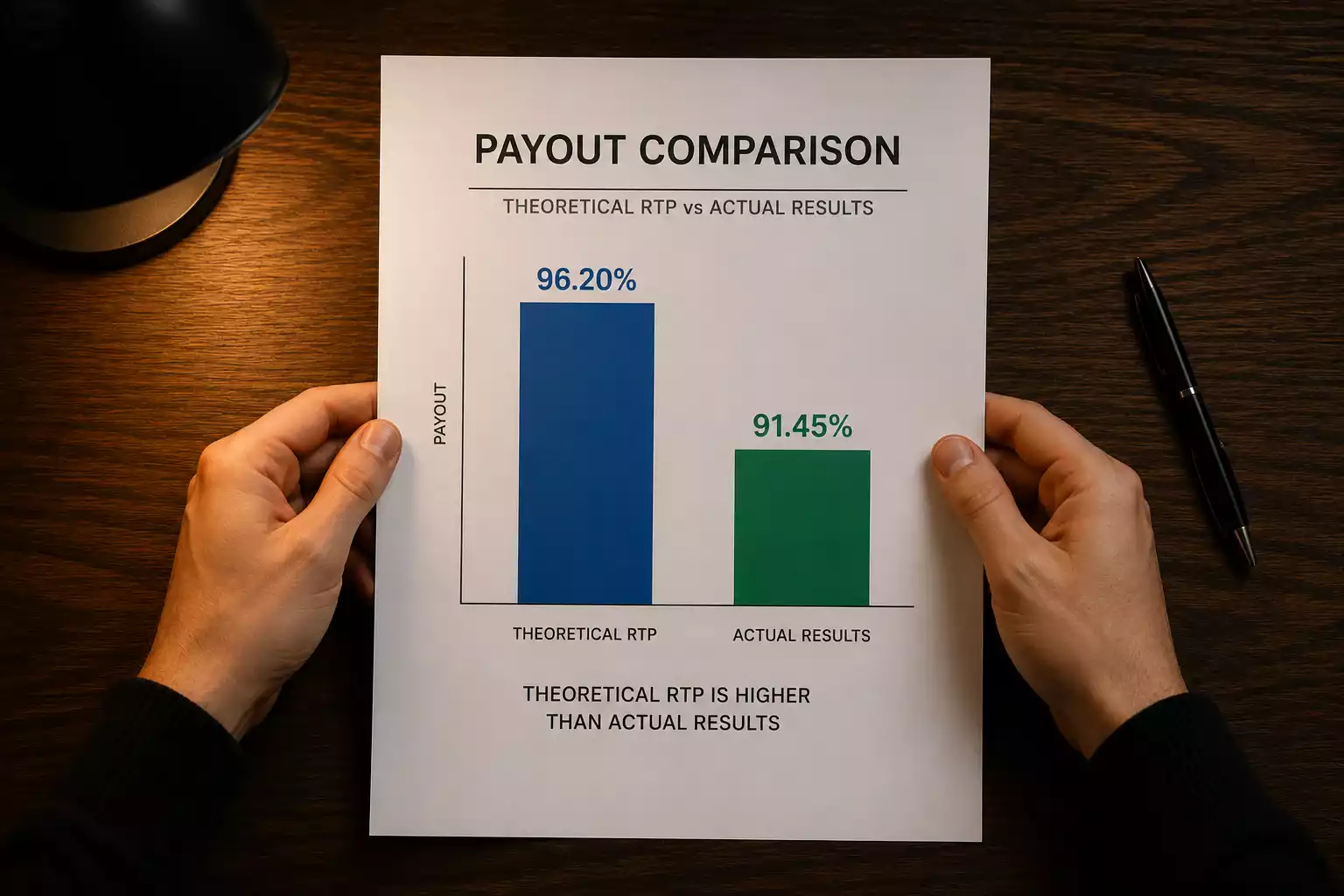
Before the x10 cap, bonuses at some offshore operators carried wagering multipliers of x35, x40, or even x50. At x40 wagering on a £200 bonus, a player would need to wager £8,000 before any withdrawal. With an average slot RTP of 96%, the expected loss on £8,000 in wagers is roughly £320 — more than the bonus itself. The bonus was never free money. It was a mechanism for extending play at a predictable cost to the player.
The question with Love Casino’s 400% offer is not whether the percentage sounds impressive. It is whether the attached conditions — wagering multiplier, game weighting, maximum bet limits, time restrictions, and maximum cashout caps — leave any realistic value after the maths. Throughout this breakdown, I am going to strip away the marketing language and run every calculation I would run if I were evaluating this bonus as part of a regulatory compliance audit. Because a bonus is not what it promises. A bonus is what remains after every condition has been met.
That evaluation has become more urgent in 2026, not less. UK online gambling generated £7.8 billion in gross gambling yield in the year to March 2025 — a 13.1% year-on-year increase. Operators are competing for a growing pool of players, and bonuses are the sharpest weapon in that competition. But the regulatory environment is shifting underneath them. The new x10 wagering cap, the £5 stake limit on online slots, and the doubling of Remote Gaming Duty from 21% to 40% have collectively reshaped the economics of player acquisition. Every bonus you see in 2026 exists in that context, and ignoring it means misunderstanding the offer.
The small print behind it: the bonus terms.
The x10 Wagering Cap: How January 2026 Rules Changed Casino Bonuses
Picture two players depositing £100 each at different casinos on the same day. One plays at a UKGC-licensed operator bound by the new x10 cap. The other plays at an offshore site with x35 terms. The first player needs to wager £1,000 on their £100 bonus to clear it. The second needs £3,500. At 96% RTP, the first player’s expected loss during clearing is £40. The second loses £140. Same deposit. Same bonus percentage. Radically different outcomes.
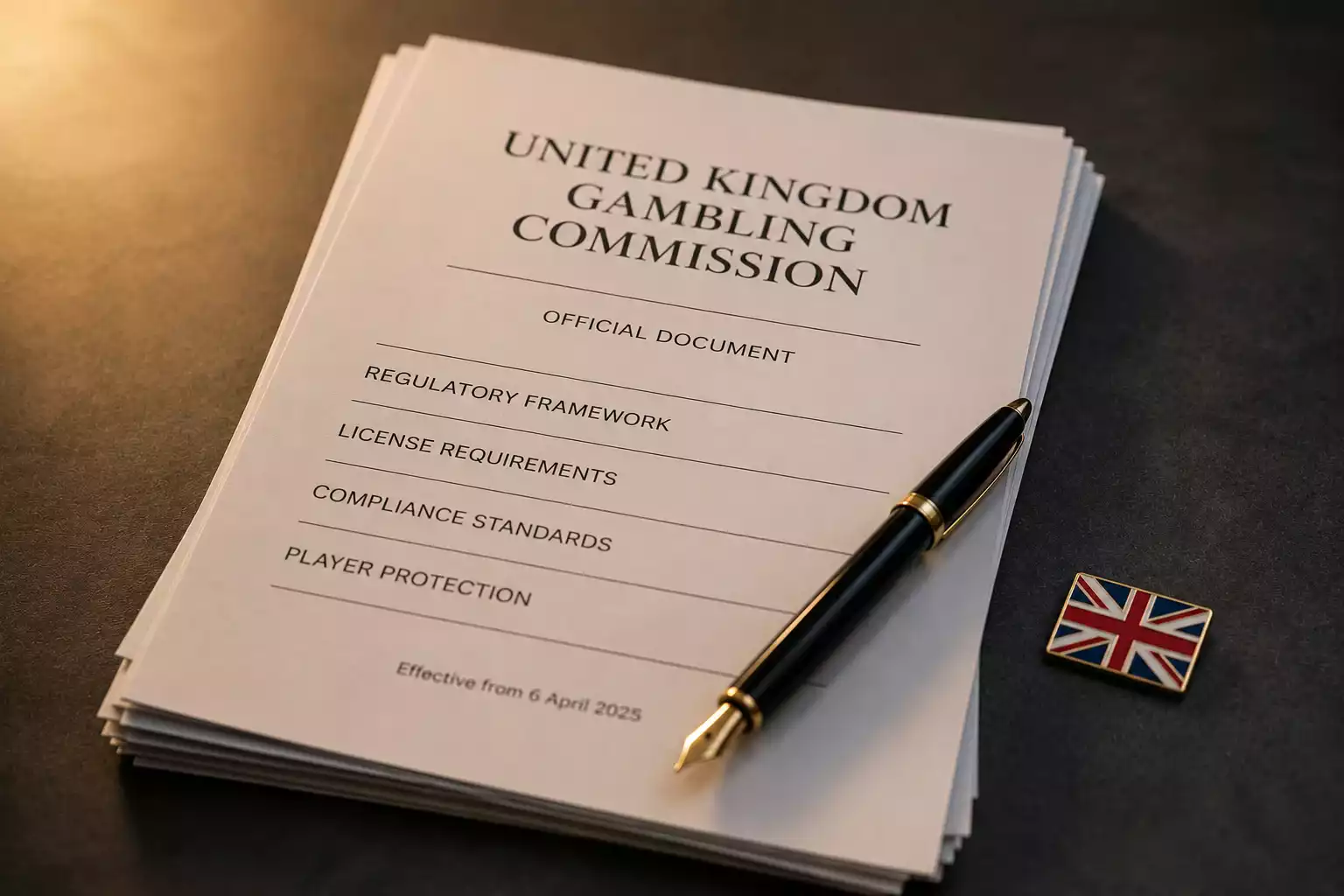
The Gambling Commission introduced the x10 maximum wagering requirement as part of amendments to the Social Responsibility Code Provision 5.1.1, effective 19 January 2026. The same amendment banned mixed-product promotional offers — meaning operators can no longer bundle casino bonuses with sportsbook free bets to obscure the total cost. John Pierce, the Commission’s Director of Enforcement and Intelligence, framed the changes as measures to “strengthen decision-making and streamline the calculation of penalties.” The language was bureaucratic. The impact was not.
For UKGC-licensed operators, the x10 cap forced a complete rethink of bonus structures. A 400% bonus at x10 wagering is dramatically more valuable to the player than the same percentage at x35. Operators responded predictably: headline percentages dropped, maximum bonus amounts shrank, and game contribution weightings tightened. The total cost to the operator per acquired player fell, but so did the marketing appeal of the headline number.
Love Casino sits in an interesting position. Operating under a Curaçao licence, it is not legally bound by the UKGC’s x10 cap. It can — and likely does — set wagering requirements higher than x10. The exact multiplier matters, and I have seen it reported variously as x30, x35, and x40 across different affiliate sites, with no consistent verification. This is the first red flag: if you cannot confirm the wagering multiplier from the operator’s own terms page before depositing, you are gambling on the terms themselves, not just the games.
The maths of wagering requirements follows a simple formula. Take the bonus amount, multiply by the wagering requirement, and apply the expected loss rate based on RTP. For a £200 bonus at x35 wagering, on slots averaging 96% RTP: £200 multiplied by 35 equals £7,000 in required wagers. Four percent of £7,000 is £280 in expected loss. The bonus gave you £200. The clearing process cost you £280. You ended up £80 worse off than if you had simply deposited and played without any bonus at all.
This is not a theoretical edge case. It is the standard outcome for the majority of players clearing high-wagering bonuses. The x10 cap exists precisely because regulators recognised this dynamic. At x10 on the same £200 bonus, the required wagers drop to £2,000, and the expected loss falls to £80 — leaving £120 of genuine value. The cap did not eliminate the cost. It made the cost proportionate to the reward.
When evaluating Love Casino’s 400% offer, the single most important question is: what is the actual wagering multiplier? Everything else — the headline percentage, the free spins, the promotional language — is noise until that number is confirmed and understood. I recommend checking the full terms and conditions directly on the operator’s site, screenshot them with a timestamp, and run the clearing cost calculation before depositing a single pound. Any bonus worth taking can survive that level of scrutiny. If the terms are difficult to find or ambiguously worded, that tells you something important about the operator’s relationship with transparency.
100 Free Spins Valued: Expected Returns at Average RTP
Free spins are the most overvalued currency in online casino marketing. I say that having spent three years auditing promotional claims for a compliance consultancy, and after calculating the expected value of free spin packages across dozens of operators. The number of spins sounds generous. The actual expected return rarely is.
Love Casino’s welcome package includes 100 free spins. To calculate what they are worth, you need three variables: the spin value (the fixed bet per spin), the RTP of the assigned slot, and any wagering requirements applied to free spin winnings. Most operators assign free spins at £0.10 per spin. Some use £0.20. Very few go higher. At £0.10 per spin across 100 spins, the total wagered amount is £10. The average RTP for online slots sits at approximately 96%, with top-performing titles reaching 98% to 99% and lower-tier slots dropping to 92% or below. At 96% RTP on £10 wagered, the expected return is £9.60 — a net expected “win” of negative £0.40.
But free spins cost the player nothing to spin, so the expected return is the full £9.60 in bonus winnings. That sounds reasonable until wagering requirements enter the picture. If those £9.60 in winnings carry x35 wagering, the player must wager £336 before withdrawing. At 96% RTP, the expected loss on £336 is £13.44 — wiping out the £9.60 entirely and then some. The free spins become a net negative proposition.
At x10 wagering under UKGC rules, the same £9.60 requires £96 in wagers, with an expected loss of £3.84. That leaves £5.76 in expected withdrawable value. Not life-changing, but genuinely positive. The difference between x10 and x35 wagering on free spin winnings is the difference between a small gift and an elaborate illusion.
There is another variable that rarely gets discussed: which slot the free spins are assigned to. Operators almost never let you choose. The assigned slot typically has an RTP at or below the platform average, and high volatility — meaning most players will see returns well below the theoretical RTP across just 100 spins. Variance on a hundred spins is enormous. Some players will win £30. Many will win £2. The expected value is a long-run average that individual sessions rarely reflect.
I also watch for maximum win caps on free spins. Some operators limit free spin winnings to £20, £50, or £100 regardless of what the reels produce. If a cap exists and falls below the potential variance upside, the effective RTP of the free spin package drops further. It is another term buried in the fine print that directly reduces value.
The honest valuation of 100 free spins at £0.10 each, on a 96% RTP slot, with no wagering and no win cap, is approximately £9.60. Every additional condition reduces that number. With offshore-level wagering requirements, the realistic expected value often rounds down to zero or below. The spins are worth taking if the terms are clean. They are not worth choosing an operator for.

Bonus Codes and Reload Offers at Love Casino
Every week, someone emails me asking where to find “the latest Love Casino bonus code.” The answer is almost always disappointing: the vast majority of codes circulating on affiliate sites are expired, unverified, or recycled from months-old promotions with terms that have since changed. I have tracked bonus code listings across a dozen affiliate portals for this operator, and the pattern is consistent — outdated codes persist because the sites publishing them earn commissions on clicks, not on code accuracy.
Bonus codes at online casinos serve a marketing attribution function more than a player benefit function. When a player enters a code during registration or deposit, the operator can track which affiliate or campaign drove that acquisition. The code itself may unlock a specific bonus variant, but the bonus is often the same offer available without any code at all. The code just tags the player to a traffic source.

Love Casino periodically lists reload bonuses and promotional offers for existing players. Reload bonuses typically offer a lower match percentage than the welcome bonus — 50% to 100% is common — and may come with their own wagering requirements, game restrictions, and time limits. The economics are the same as the welcome bonus, just scaled down. Run the same clearing cost calculation: bonus amount multiplied by wagering requirement multiplied by house edge. If the result exceeds the bonus value, the reload is a net cost.
The Remote Gaming Duty increase from 21% to 40%, introduced in the November 2025 budget, has put additional pressure on operator margins across the board. For UKGC-licensed operators, this has already led to reduced bonus frequency and lower match percentages. Offshore operators face different tax structures, but the competitive pressure remains — if UKGC-licensed competitors are pulling back on promotions, offshore operators may respond with inflated headline numbers that look generous by comparison but carry heavier conditions.
My standing advice on bonus codes is simple. Ignore third-party code listings. Go directly to the operator’s promotions page. Read the full terms for any offer before entering a code. If the terms are not clearly published alongside the code, treat the offer with suspicion. And never deposit at an operator solely because a code promises an enhanced bonus — the code is a tracking mechanism, not a guarantee of value. The value lives in the terms, not the code.
How the 40% Remote Gaming Duty Affects Bonus Generosity
When the UK government nearly doubled Remote Gaming Duty from 21% to 40% in the autumn 2025 budget, the industry reaction was immediate and visceral. General Betting Duty went from 15% to 25% in the same announcement. I was at an industry conference the following week, and the phrase I heard most often from operator-side executives was “margin compression.” What that means for players is straightforward: less money available for promotional spending.
The logic runs in a direct line. An operator generating £7.8 billion in UK online gross gambling yield — the figure reported by the Gambling Commission for the year to March 2025, up 13.1% year-on-year — now pays 40% of that to the Treasury instead of 21%. On £7.8 billion, the difference is roughly £1.5 billion in additional tax. That money has to come from somewhere. The three levers operators pull are: reducing marketing spend (including bonuses), tightening game RTP configurations where contractually possible, and raising minimum deposits or withdrawal thresholds.
UKGC-licensed operators have already begun adjusting. Several major brands cut their welcome bonus percentages in Q1 2026. Others shifted from deposit match bonuses to free spin packages, which have lower expected costs to the operator. The trend is clear: the era of lavish, high-percentage welcome bonuses at regulated UK operators is contracting.
Love Casino, operating under a Curaçao licence, does not pay UK Remote Gaming Duty. This gives it a structural cost advantage in bonus marketing — it can maintain higher headline percentages because it faces lower tax burdens on UK-generated revenue. The 400% offer exists partly because of this tax arbitrage. An operator paying 40% duty could not sustain a 400% match at meaningful deposit levels without the clearing conditions being punishingly unfavourable. An operator paying no UK duty can afford a higher headline number — but that does not mean the net value to the player is higher.
The key insight is this: bonus generosity is a function of operator economics, not player generosity. When taxes rise, bonuses shrink at compliant operators. When an offshore operator maintains a seemingly generous bonus in a market where regulated competitors are cutting back, the explanation is usually regulatory arbitrage, not altruism. The withdrawal terms and processing conditions are where the real cost to the player lives, and those are worth scrutinising far more carefully than the deposit match percentage.
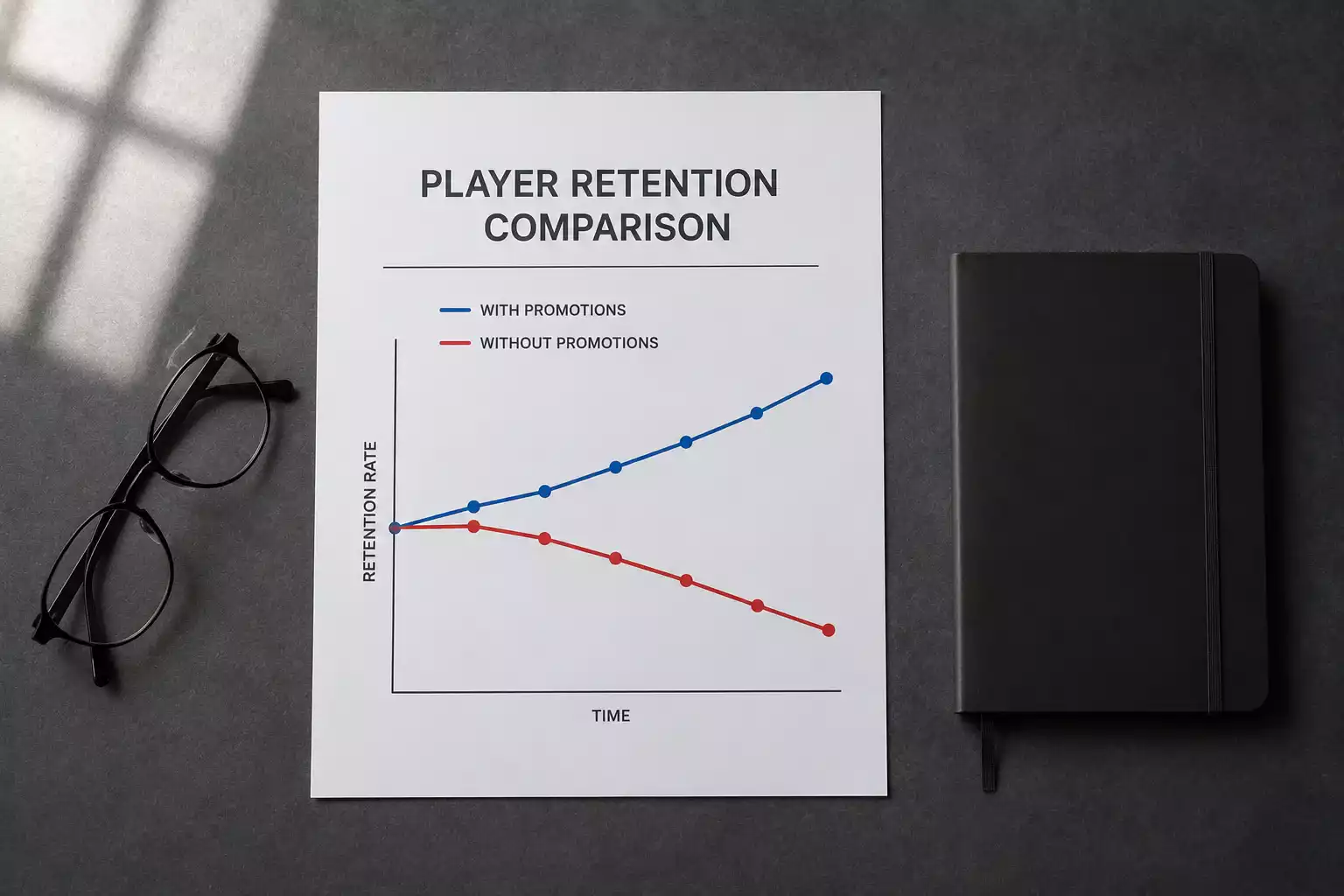
I have seen this cycle before. In 2019, when the UK introduced enhanced due diligence requirements, several UKGC operators reduced bonus frequency to offset compliance costs. Offshore operators advertised more aggressively during that window. The pattern repeats whenever regulatory costs increase for the licensed sector — and the 40% RGD represents the largest single cost increase in a decade.
Cashback and Loyalty Programmes: What Love Casino Offers Beyond Welcome
Welcome bonuses get all the attention. Cashback and loyalty programmes determine the long-term cost of play. I have always told clients that if they are going to evaluate an operator, spend five minutes on the welcome offer and thirty minutes on the loyalty structure — because the loyalty programme is where the ongoing player-operator economic relationship actually lives.
Cashback offers at online casinos typically return a percentage of net losses over a defined period — daily, weekly, or monthly. The percentage ranges from 5% to 15% at most operators. A 10% weekly cashback on net losses of £100 returns £10. Simple enough. But the conditions vary: some operators apply wagering requirements to cashback funds, some cap the maximum cashback amount, and some exclude certain game types from the net loss calculation. At offshore operators, I have occasionally seen cashback terms that look generous at headline level but exclude the highest-volume game categories, effectively reducing the actual return to a fraction of the advertised percentage.
Love Casino advertises a loyalty programme with tiered levels. The specifics — point accumulation rates, tier thresholds, and redemption values — are not always published in full, which makes independent evaluation difficult. What I can say from general industry patterns is that loyalty programmes at Curaçao-licensed operators tend to lack the structured transparency required by UKGC licence conditions. A UKGC-licensed operator must clearly publish loyalty programme terms and ensure that rewards do not incentivise play beyond the player’s means. No equivalent requirement exists under the current Curaçao regulatory framework.
The £5 stake limit introduced in April 2025 for online slots — with a £2 cap for players aged 18 to 24 — has also changed how loyalty points accumulate at UKGC-licensed sites. Lower maximum stakes mean slower point accumulation at any per-wager earning rate. Operators have responded by adjusting point multipliers, but the net effect is that reaching higher loyalty tiers takes longer than it did before April 2025. At Love Casino, which does not operate under UKGC stake limits, the accumulation dynamics are different. Players can wager at higher stakes, accumulate points faster, and reach higher tiers sooner — but also lose money faster in the process.
The bottom line on loyalty programmes is the same as bonuses: calculate the actual return as a percentage of total wagers, not as a percentage of losses. A 10% cashback on losses sounds like a meaningful safety net. Expressed as a percentage of total wagers at 96% RTP, it is 10% of 4%, or 0.4% of total money wagered. Useful, but not transformative. The loyalty programme does not change the fundamental economics of play. It softens the edges slightly, and that softening has a precise mathematical value that rarely matches the marketing language surrounding it.

Frequently Asked Questions
Does Love Casino offer a no deposit bonus in 2026?
No deposit bonuses at offshore operators change frequently and without notice. As of May 2026, there is no independently verified no deposit bonus at Love Casino. Affiliate sites advertising one may be referencing expired promotions or unverified claims. Check the operator’s own promotions page directly for current offers, and read the full terms before assuming any bonus is available.
How does the new x10 wagering cap affect the 400% welcome bonus?
The UK Gambling Commission’s x10 wagering cap applies only to UKGC-licensed operators. Love Casino operates under a Curaçao licence and is not bound by this regulation. Its wagering requirements may be significantly higher than x10, which directly increases the expected cost of clearing the bonus. At x35 wagering on a £200 bonus with 96% average slot RTP, the expected clearing cost is approximately £280 — exceeding the bonus value itself.
Can I combine the welcome bonus with free spins at Love Casino?
Welcome bonus packages that bundle deposit matches with free spins are common at offshore operators. Whether the two components carry separate or combined wagering requirements varies by operator and by promotion. The critical detail is whether free spin winnings are subject to additional wagering on top of the deposit match wagering. Read the specific terms for each component independently before depositing.
Does Love Casino offer cashback bonuses for existing players?
Love Casino advertises cashback as part of its ongoing promotions. The actual percentage, frequency, wagering conditions, and game eligibility for cashback are subject to change and may not match third-party descriptions. Cashback at 10% of net losses translates to roughly 0.4% of total wagers at standard slot RTP — a measurable but modest return that does not fundamentally alter the economics of play.