
 Available in GB
Content

The Question Everyone Asks After a Big Win
About once a month, someone messages me in a mild panic: “I just won £5,000 at an offshore casino — do I owe HMRC tax on this?” The panic is understandable. Most people’s experience with money arriving unexpectedly involves tax implications. But gambling winnings in the UK occupy an unusual position in the tax code, and the answer is more straightforward than the question suggests.
Gambling winnings are not taxable income in the UK. This applies regardless of the amount won, the type of gambling, or the licensing jurisdiction of the operator. Whether you win £50 on a UKGC-licensed slot or £50,000 at a Curaçao-licensed casino like Love Casino, HMRC treats the winnings the same way: they are not income, they are not capital gains, and they are not subject to National Insurance contributions. The principle has been consistent since the abolition of betting duty in 2001, when the tax burden shifted from punters to operators.
The reason is structural rather than generous. HMRC’s position is that gambling is not a trade or business activity for the vast majority of people. If winnings were taxable, losses would logically be deductible — and since most gamblers lose over time, the Treasury would face a net revenue loss from allowing gambling loss deductions. The simpler approach — taxing the operators rather than the players — generates more revenue with less administrative complexity.
The rules alongside the duty: UK gambling regulation.
Where the Tax Burden Actually Falls
If you are not paying tax on your winnings, who is? For UKGC-licensed operators, the answer is clear and substantial. The remote gaming duty — the tax on online gambling revenue — increased from 21% to 40% in 2026, alongside a general betting duty increase from 15% to 25%. These are taxes on the operator’s gross gambling yield, not on individual player winnings, and they represent the mechanism through which the Treasury extracts revenue from the gambling sector.
The UK online gambling market generated £7.8 billion in gross gambling yield for the year ending March 2025, representing a 13.1% increase year on year. The tax rate increases reflect both the sector’s growth and the government’s view that gambling operators can bear a higher fiscal burden. 56% of UK gambling revenue now comes from online channels, and the tax structure is designed to capture that shift.

Love Casino, as a Curaçao-licensed operator, does not pay UK remote gaming duty. This creates a fiscal asymmetry that regulators view with concern: the operator captures revenue from UK players without contributing to the UK tax base that funds gambling regulation, treatment services, and enforcement. The new statutory gambling levy, which replaced voluntary GambleAware contributions from April 2026, addresses this partially by funding gambling harm services through a mandatory charge on licensed operators. But unlicensed operators — by definition — do not pay the levy either.
When Gambling Becomes a Trade
I knew a professional poker player who made his living from tournament winnings and cash game profits over nearly a decade before HMRC took an interest. His case illustrates the one significant exception to the “gambling winnings are tax-free” principle: if HMRC determines that your gambling constitutes a trade — a systematic, organised activity with a profit motive and the characteristics of a business — then your winnings become taxable as trading income.
The threshold for this determination is high and is assessed on a case-by-case basis. Factors HMRC considers include the degree of organisation and skill involved, whether you maintain records as a business would, whether gambling is your primary source of income, and whether your approach is systematic rather than recreational. A recreational player who has a lucky weekend at Love Casino is nowhere near this threshold. A person who grinds poker professionally, tracks results in spreadsheets, and declares gambling as their occupation on tax returns might be.
Casino games — slots, roulette, blackjack, baccarat — are almost never treated as a trade because the house edge makes systematic profit functionally impossible. The trade classification historically applies to poker, sports betting with demonstrated expertise, and advantage play techniques like card counting (which casinos prevent through other means). If your gambling at Love Casino consists of standard casino games, the trade classification is not a realistic concern.
Anti-Money Laundering and Source of Funds
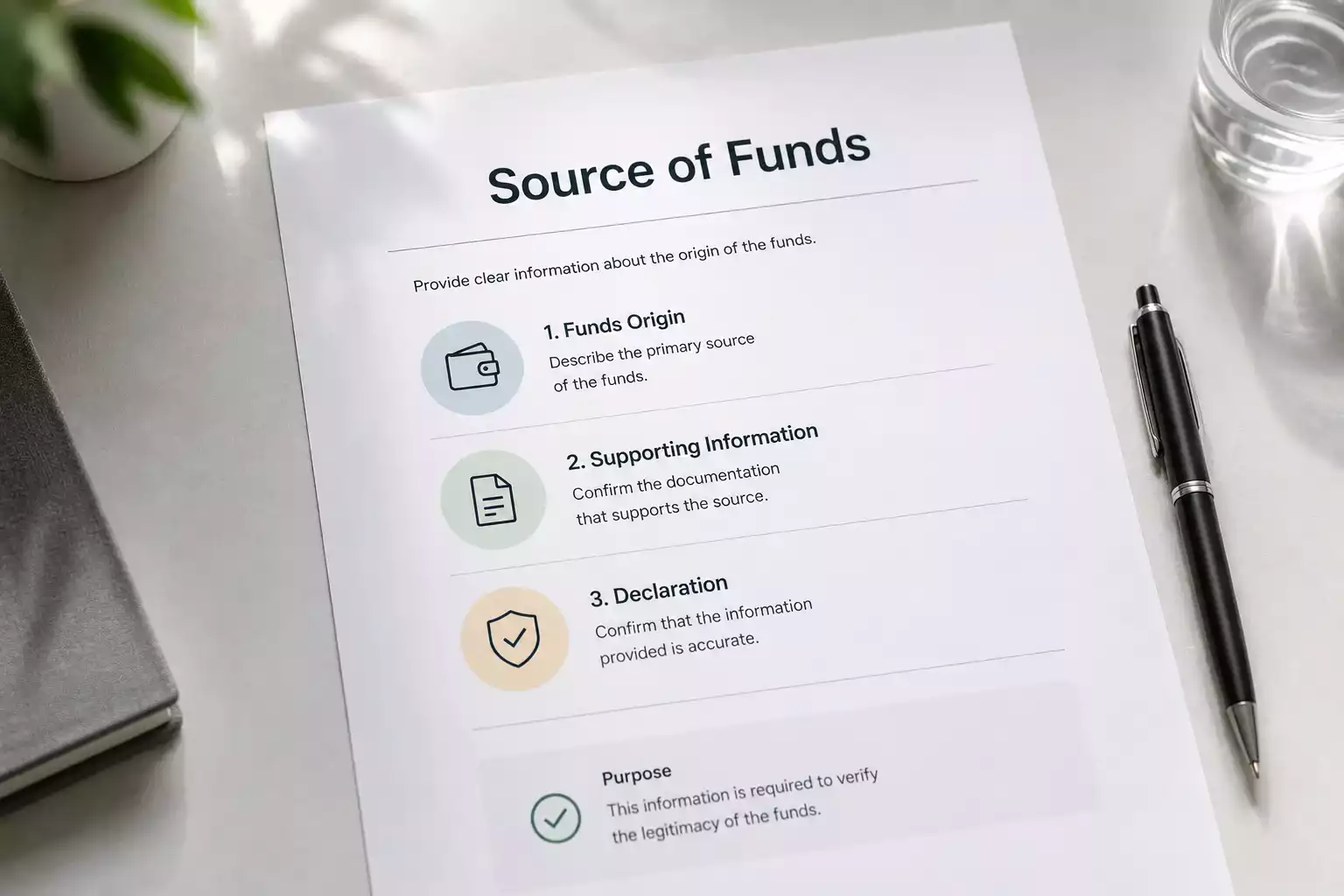
Tax-free winnings do not mean invisible winnings. If you deposit a large casino payout into your UK bank account, the bank may ask where the money came from. This is not a tax inquiry — it is an anti-money laundering check, and banks are legally required to conduct them on unusual or large deposits.
The practical advice is simple: keep records. Screenshot your withdrawal confirmations, save email receipts from the casino, and maintain a record of your deposit history. If your bank asks about a £3,000 deposit from a cryptocurrency exchange (because you withdrew from Love Casino in Bitcoin and converted to sterling), you need documentation showing the legitimate source of those funds. Without it, the bank may freeze the deposit pending investigation, which is inconvenient rather than legally dangerous but still worth avoiding.
Cryptocurrency adds a layer of complexity here. Crypto gambling wager volume reached £26 billion in Q1 2025, and UK banks have become increasingly cautious about deposits from cryptocurrency exchanges. While the casino winnings themselves are not taxable, the conversion from cryptocurrency to sterling can trigger anti-money laundering queries. Having a clear paper trail — from casino account to crypto wallet to exchange to bank account — prevents delays and demonstrates legitimate sourcing.
The Withdrawal Process and Tax Records
One thing I always recommend to players who gamble at offshore casinos is maintaining a simple annual record of deposits and withdrawals. Not because HMRC requires it for recreational gambling, but because the record serves multiple purposes: it clarifies your net position (most people overestimate their winnings and underestimate their deposits), it provides documentation if your bank queries a deposit, and it gives you an honest view of your gambling expenditure over time.
The format does not matter — a spreadsheet, a notes file, even a dedicated notebook. Record the date, the amount, whether it was a deposit or withdrawal, and the payment method used. At the end of the year, calculate your net position. If the number surprises you, that information is valuable regardless of its tax implications.
Winnings from Love Casino are not reported to HMRC by the operator, because Love Casino is not a UK-licensed entity with UK reporting obligations. This means there is no automatic cross-check between your casino activity and your tax return. For recreational players, this is irrelevant because the winnings are not taxable anyway. For anyone whose gambling activity approaches the characteristics of a trade, the absence of automatic reporting does not change the obligation to declare trading income.
Do I have to pay tax on winnings from Love Casino?
No. Gambling winnings are not taxable income in the UK, regardless of the amount or the operator’s licensing jurisdiction. This applies to all forms of gambling, from slots to table games. The exception is if HMRC determines your gambling constitutes a trade, which is extremely rare for casino game players.
Will my bank question a large casino withdrawal?
Banks may ask about the source of large or unusual deposits as part of anti-money laundering checks. Keep screenshots of withdrawal confirmations and deposit history to document the legitimate source of funds. This is especially important if withdrawing via cryptocurrency and converting to sterling.
Should I report my gambling winnings to HMRC?
Recreational gambling winnings do not need to be reported on your self-assessment tax return. Only if your gambling constitutes a trade — a systematic, organised activity that is your primary income source — would you need to declare the income. Standard casino play does not meet this threshold.
Love Casino Guides and UK Analysis
Our top casino picks for the UK
- BeOnBetBonus: 100% up to €500 + 100 FS · Payout speed: 1-3 business days
- AmunbetBonus: Join now and get 450% up to 2,700 GBP + 450 FS · Payout speed: 1-3 business days
- DieselwinBonus: Welcome Pack 250% up to £4000 + 200 FS · Payout speed: 1-3 business days
- SlotoSportBonus: 500% up to £ 10 200+ 777 FS · Payout speed: 1-3 business days
- NightWinBonus: £900 + 400 free spins · Payout speed: 1-3 business days
- SpinFormulaBonus: 550% Up To £15,000 + 550 FS · Payout speed: 1-3 business days
- ZombillionBonus: Welcome Pack 250% up to £4000 + 200 FS · Payout speed: 1-3 business days
- EvoSpinBonus: 125% up to €2500 + 125 Free Spins · Payout speed: 1-3 business days
- x3betBonus: Welcome Pack 100% Up to £1.000 + 200 Free Spins · Payout speed: 1-3 business days