
 Available in GB
Content
- UK Licensing and Checking a Casino’s Status
- Live Casino Games and the UK Table-Game Context
- Slot-Stake Limits and the Meaning of “Best”
- Finding Crazy Time at a Live Casino
- Strategy Claims and the Limits of What Can Be Established
- Crazy Time as a Live Casino Game Show
- Free Play, Practice and Real-Money Gambling
- Bonuses, Deposits and Account Safeguards
- Rules, Scores and Multipliers: What the Evidence Supports
- Demo Versions and What Remains Unverified
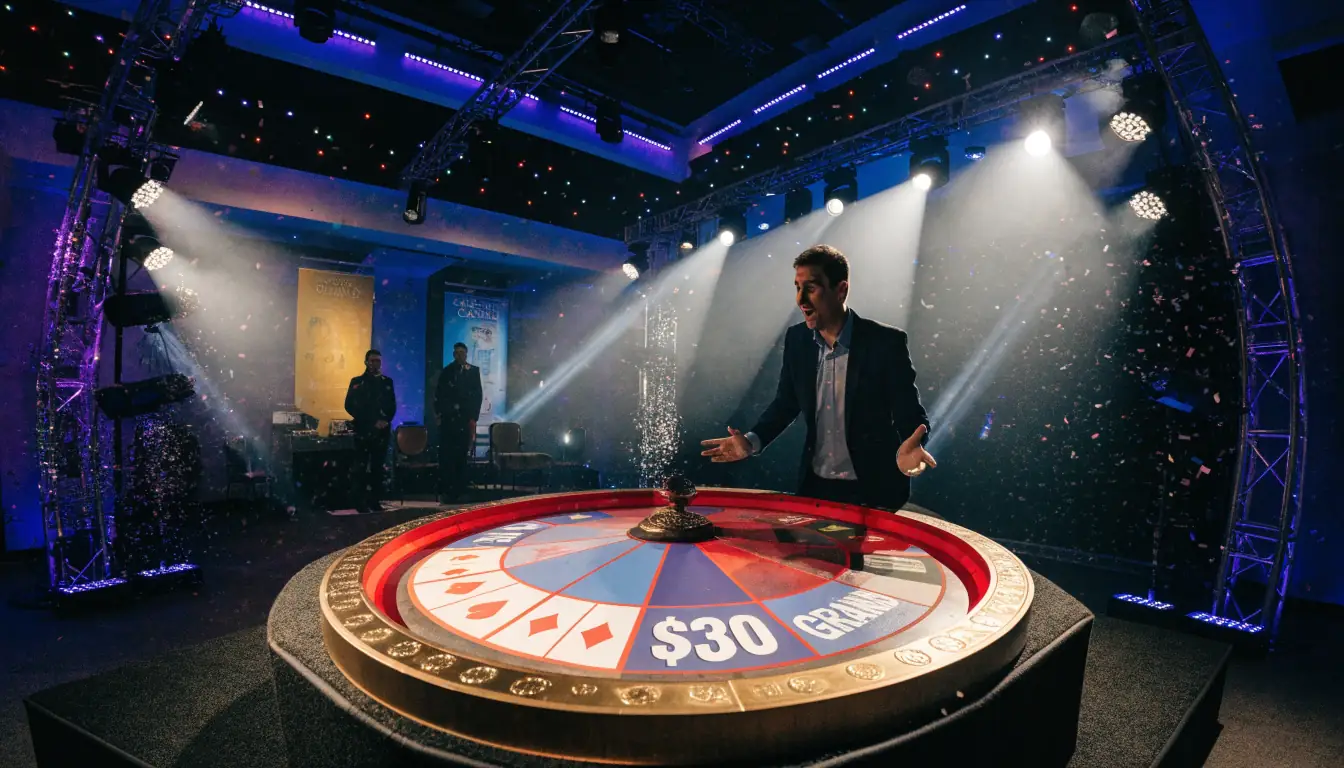
The guide sets out Great Britain’s licensing context and separates supported facts about Crazy Time from strategy and demo claims that remain unverified.
UK Licensing and Checking a Casino’s Status
A casino offering Crazy Time is subject to the same operator-licensing framework as other remote gambling services when it accepts customers in Great Britain. The UK Gambling Commission regulates gambling activity in the United Kingdom, including online casinos, and is the sole regulator for commercial gambling in Great Britain. A remote operator serving consumers in Great Britain must hold the relevant Commission licence; the location of its servers or other key equipment does not remove that requirement.
The legal framework has a territorial distinction. The Gambling Act 2005 applies to gambling in England, Scotland and Wales, while Northern Ireland is outside that Act’s scope. As a result, references to Great Britain and the United Kingdom should not be treated as interchangeable in every licensing statement. For a casino taking remote wagers from customers in Great Britain, the central question is whether the business holds the appropriate UK Gambling Commission licence.
The Commission issues operating licences to businesses and personal licences to individuals whose roles require them. These are different forms of authorisation: a personal licence does not, by itself, establish that a casino business is licensed to offer remote gambling. The relevant check for a casino brand is therefore its operating status, with attention to the business name and the remote gambling activities covered by its licence.
Checking the operator, not just the game
A game’s appearance on a website does not establish that the site is authorised to offer gambling to Great Britain customers. Nor does a brand name alone necessarily identify the legal entity responsible for the service. Licence checks should be made against the UK Gambling Commission’s public register, matching the operator’s business details and the casino brand or domain used by customers. The register is the primary place to confirm whether the business has the required authorisation.
This distinction matters when a site presents itself as a casino offering live games. A page may describe a game, display a logo or direct visitors to an account area, but those details do not confirm the operator’s licensing position. The status check concerns the company providing the gambling service and the scope of its authorisation, rather than the game title or the way the site promotes it.
Deal or No Deal Casino UK: Slots and Rules
A specialist review reported that a search of the Commission’s public register, dated 26 September 2026, did not return a LuckyPays entry under that brand or the stated domain, including luckypays.io. This is a dated finding attributed to a secondary review, not a substitute for checking the Commission’s register directly. Register entries and business details can change, and a search can also depend on the name or domain used. The report should therefore be treated as a reason to verify the exact operator details, not as a definitive statement about present status.
For any casino under consideration, the name shown in the register should be compared with the business identified in the site’s terms and account information. Where a brand is operated by a separately named company, that relationship needs to be clear enough to establish which entity is responsible. If the details do not match or the operator cannot be identified, the licensing position has not been established by the brand’s presentation alone.
Why the licence check is relevant
The licensing requirement applies to remote gambling offered to Great Britain consumers regardless of where the operator’s equipment is located. A company cannot avoid the requirement simply by basing technical infrastructure or corporate operations elsewhere. The relevant point is whether it is providing remote gambling to customers in Great Britain.
A current licence is also the basis for determining whether the operator falls within the UK Gambling Commission’s regulatory system. A casino’s own statements about regulation should not be treated as proof in place of the public register. Similarly, a licence held by another company, a software supplier or an associated brand does not automatically establish that the particular gambling operator is authorised. The register check should relate to the business that accepts the customer’s account and wagers.
The checks are separate from deciding whether a particular live game is available. An operator may be licensed without offering Crazy Time, and a site’s claim to offer the game does not establish that it is licensed. These are distinct questions: one concerns the operator’s authority to serve the market, while the other concerns the catalogue of games it makes available.
Attention: A casino’s own statements about regulation should not be treated as proof; the only definitive way to confirm authorization is through the UK Gambling Commission’s public register.
Accordingly, “Crazy Time casinos” is not a meaningful licensing category in itself. The regulatory test attaches to the operator, not to a game-specific label. For a casino serving Great Britain, the decisive safeguard at this stage is a matching, relevant operating licence recorded by the UK Gambling Commission.
Live Casino Games and the UK Table-Game Context
Live casino sits alongside digital table games as a way of presenting casino play through an online service. Its defining contrast with a conventional software-only table is the live element: play is associated with a streamed setting and a human presenter or dealer, rather than being represented solely by computer-generated graphics. That broad distinction helps place a title such as Crazy Time within the wider casino landscape, without establishing its specific format or features.
The category is not limited to one style of game. Live casino environments may be associated with familiar table-game names as well as other formats, so the label describes a wider setting rather than a single set of rules. Blackjack, poker and roulette, for instance, are established table-game categories; their presence in a live casino context does not make them interchangeable. Each remains a separate game with its own structure. The same care applies when a named product is discussed alongside conventional table games: sharing a live casino setting does not establish that it follows the same format.
There is a documented history of live casino games in the UK table-game environment. Grosvenor first presented its live casino games in 2013, with a selection that included Blackjack, Texas Hold’em and Roulette. This places live casino within an established account of online casino development, rather than making it a new category created by the appearance of any one title. The examples also show that live casino has been used to present recognisable card and casino games, not just products designed around a distinct show-like identity.
Crash Casino Games in the UK: How They Work
That history offers useful context for interpreting interest in Crazy Time. A person looking for Crazy Time at an online casino is considering a named casino product within a broader online gambling environment where live offerings have included both table games and other formats. The category helps orient the discussion, but it does not by itself establish how a particular product works, who supplies it, or which operators carry it. Those are separate questions from the general place of live casino in the market.
The distinction matters because “live casino” can be used broadly in descriptions of an online casino’s games. It may refer to a section or format that groups live-presented products, rather than being a guarantee that every game in that section resembles a traditional table. A product’s name and its placement in a live casino context are not enough to infer its mechanics. Equally, a history of live table games at an operator cannot be taken as evidence that a separate named title is part of its current catalogue.
Grosvenor’s 2013 launch is therefore a specific historical reference point, not a current catalogue statement. It records that the operator introduced live casino games and identifies several titles in that original range. It does not establish what is available there now, nor does it support a claim about Crazy Time at Grosvenor. Keeping that distinction clear prevents a historical example from being mistaken for evidence about present-day product line-ups.
In the UK, "table game" identifies a family of games, whereas "live casino" describes a mode of presentation. A product may fit one or both descriptions depending on its design.
In the UK context, table games and live casino belong to a wider regulated online gambling market, but the categories describe different things. “Table game” identifies a family of games; “live casino” describes a mode of presentation. A product might fit one description, the other, or both, depending on its actual design. Without product-specific details, classification should remain cautious. Crazy Time can be discussed as part of the live casino conversation prompted by its name and context, while claims about its precise relationship to traditional table games require evidence beyond the general history of live casino.
This broader perspective is more useful than treating every live casino product as a variation on blackjack or roulette. The established examples show how online live offerings have encompassed familiar casino games, while the category itself is not confined to those examples. Crazy Time belongs in a discussion of the online casino landscape, but its name alone does not settle whether it should be understood as a conventional table game, a show-oriented product, or another format. The wider UK context supplies background, not a substitute for product-specific information.
Slot-Stake Limits and the Meaning of “Best”
The word “best” can refer to different things: a game’s features, an operator’s services or the terms attached to an account. Those are separate claims and require separate evidence. A casino cannot be ranked as the best place for Crazy Time merely because a page uses that description; the label does not establish the game’s availability, the quality of the service or the value of an offer.
Stake limits also need to be applied to the right category of gambling. A specialist review describes Great Britain’s online-slot limits as £5 for each game cycle for adults aged 25 or older and £2 for those aged 18 to 24. The same review says those limits do not cover roulette or blackjack. These statements concern online slots and named table games; they do not, by themselves, settle how a different game should be classified.
Casino Dice Games in the UK: Rules and Online Play
Crazy Time is associated with live casino searches, but that association alone does not determine whether the slot rules apply. The game’s classification would need to be established before drawing conclusions about a stake limit. It would therefore be misleading to present either of the slot figures as a confirmed Crazy Time limit without evidence that the game falls within that category.
The age-based distinction in the specialist review matters when assessing claims about online slots. A statement that gives one limit for all adults would omit the difference described there. Equally, transferring those figures to every casino game would extend the claim beyond its stated scope. The figures should be understood as a description attributed to a review, not as a universal rule for every product labelled a casino game.
The comparison with roulette and blackjack illustrates the same boundary. The review says the slot limits do not apply to those games, but that does not establish a general exemption for all live games or game-show formats. A category should not be inferred from presentation, branding or the use of a live host. The relevant question is how the particular product is classified, rather than whether it appears on a casino site.
Searches for the best Crazy Time casino or the best UK casino sites offering the game can also conflate availability with value. A site’s presence in a list would not prove that it is superior, and a bonus headline would not establish that its terms suit every account. These judgements require evidence about the specific operator and offer. A general label cannot substitute for details that support a comparison.
Do
- Verify the specific classification of a game before applying stake limits
- Base rankings on evidence of operator services and offer terms
- Compare the register name with the business identified in the site’s terms
Don’t
- Use the label “best” as evidence of game availability or quality
- Apply online-slot stake limits to games like roulette or blackjack
- Assume a casino is superior based on its presence in a list
The same caution applies to casino bonuses connected with Crazy Time. A promotion may be presented alongside a game without being a game-specific benefit, and the word “best” says nothing about its conditions. Nor do search interest or prominent placement establish that a promotion improves the expected outcome of play.
Stake rules, game classification and comparative value are therefore distinct questions. The specialist review gives figures for online slots and draws a boundary around roulette and blackjack. It does not support applying those figures to Crazy Time or ranking a particular casino as the best option. Claims about limits or superiority should be confined to what the evidence actually demonstrates. Always gamble only what can be afforded to lose.
Finding Crazy Time at a Live Casino
Whether Crazy Time can be played at a particular live casino is an operator-specific question. A game’s presence in one casino’s catalogue does not establish that another offers it, and a general description of the game does not confirm that it is available to UK customers. Availability should therefore be assessed through the operator’s own current game catalogue, rather than inferred from mentions elsewhere.
A useful first check is the live casino lobby. If a title search is available, searching for “Crazy Time” can show whether the game appears in that operator’s listed games. Browsing the live-game categories may also help where titles are grouped by format or provider. A listing is most informative when it identifies the game clearly and opens a playable page; a search result or promotional mention on its own may not show that the game can be accessed through the account in question.
Mines Casino Game UK: Rules, Claims and Play
The distinction between a game being listed and being playable matters. A catalogue entry may lead to an information page, a temporarily unavailable table, or a sign-in screen. The operator’s game page can clarify whether the title is currently accessible, but promotional material should not be treated as a substitute for checking the live lobby. If the listing is unclear, customer support can be asked whether Crazy Time is available to UK customers and whether any account or location conditions apply.
Searches for a “top” Crazy Time casino do not, by themselves, establish which operator offers the game or which is preferable. Availability is a factual criterion; a ranking requires separate, stated measures. A comparison that names an operator without showing a current game listing does not establish that Crazy Time can be played there. Nor does a casino’s wider live-game catalogue prove that this particular title is included.
The game’s wheel imagery may also appear in descriptions or promotional material. Such references should be distinguished from an operator’s actual game listing. A wheel-themed image or a general mention of a live casino game is not enough to confirm the precise title. The clearest evidence is an identifiable Crazy Time entry in the operator’s own catalogue, followed by confirmation that the game page opens and permits access.
For real-money play in Great Britain, the operator’s regulatory status remains relevant even when the immediate question is game availability. The Gambling Commission requires remote operators serving Great Britain consumers to hold the appropriate licence. Before depositing, the licence number should be checked against the Commission’s public register. This does not establish that Crazy Time is offered; it addresses a separate question about the operator.
Checking Game Availability
- Search for “Crazy Time” in the live casino lobby
- Confirm the game page opens and permits access
- Check the operator’s licence number against the UKGC public register
- Verify the operator’s regulatory status before depositing
Game catalogues can change, so a listing checked at one point should not be treated as a permanent guarantee of availability. The most careful conclusion is limited to what the operator currently displays and allows its customers to access. Where Crazy Time is not identifiable in the live lobby, its availability should not be assumed from an unrelated casino page, a general game description or a third-party recommendation.
Any decision to play for money also carries financial risk. Only gamble with money that can be afforded to lose.
Strategy Claims and the Limits of What Can Be Established
A claim about a Crazy Time strategy is meaningful only if it identifies what the approach is intended to achieve and the evidence supporting that outcome. Advice presented as a way to predict a result requires more than a memorable sequence of previous outcomes or a confident explanation. Without documented game mechanics and suitable outcome data, it cannot establish that a particular wagering pattern improves the chance of success.
This distinction matters because a description of a game is not evidence for a strategy. Knowing how a game is structured, where wagers can be placed or how results are displayed would not, by itself, show that one choice is more effective than another. Nor would a strategy become reliable simply because it is described as mathematical, based on experience or associated with a long record of play.
Chicken Road Game Casino UK: Format and Access
What trackers can and cannot show
A Crazy Time tracker may record outcomes over a period of play. Such a record can describe what has already appeared, provided the entries are accurate and the record is complete. It cannot, on that basis alone, demonstrate what will happen next. A sequence may look patterned after it has occurred, but that appearance is not proof of a predictive relationship.
A tracker is therefore best understood as a record-keeping tool, not a forecasting method. Its value depends on how results are collected, whether missing entries are disclosed and what conclusions the data can support. A display that highlights selected outcomes while concealing its collection method does not provide a sound basis for estimating future results. Claims that a tracker identifies a “due” outcome or a favourable moment to wager need independent evidence, not merely a visual pattern.
The same caution applies to references to a casino tracker in general. Records from a particular session, account or website may not represent all play, and historical observations should not be confused with a rule governing future outcomes. A chart can summarise past events; it cannot turn them into a dependable prediction without a demonstrated method and supporting evidence.
Reading strategy claims critically
A strategy description should make its assumptions clear. It should explain whether it is about organising a budget, choosing when to stop, or predicting a game result. These are different claims. A spending plan may help define exposure, but it does not establish that a wager is more likely to win. Likewise, an account of one successful approach is an anecdote, not a test showing that the approach works consistently.
Warning: A sequence of previous outcomes or a visual pattern in a tracker is not proof of a predictive relationship and cannot guarantee future results.
Claims about Crazy Time casino strategies can also rely on apparent history: a sequence of outcomes, a proposed cycle or a suggested response to recent results. Such material should be treated cautiously unless the underlying data, method and limits are transparent. Even a substantial-looking record may be selectively presented or interpreted after the event. A strategy’s name, popularity or confident presentation is not evidence of predictive power.
Searches for the game’s history raise a separate issue. Historical information about a product, where documented, would not by itself validate a wagering method. Establishing a strategy requires evidence relevant to the strategy’s specific prediction, rather than general background about the game or casino gambling.
No strategy can be treated as a guaranteed way to produce a particular result on the basis of assertion alone. Gambling carries a risk of loss, and only money that can be afforded to lose should be wagered.
Crazy Time as a Live Casino Game Show
Crazy Time is presented here as the subject of a live casino game-show search in the UK. That description gives the broad category of interest, but it does not by itself establish how the game works, who supplies it, or whether it is offered to British players. Those distinctions matter: a game’s title and the way it is described are not substitutes for confirmed product information.
The phrase “live casino game show” signals an interest in gambling presented in a show-like format, rather than simply a conventional casino table. However, it should not be taken as a complete description of the experience. The label alone does not confirm the game’s layout, sequence of play, available wagers, or any other rules. Nor does it establish whether the presentation involves a live host, a particular studio, or specific visual features. Such details require an authoritative description of the game itself.
Live Dream Catcher Casino UK: Availability and Checks
The same caution applies to the provider. A title may be associated with a particular supplier in some listings, but that association should not be assumed without a reliable product or operator record. Provider identity is distinct from the casino hosting a game: one describes the source of the game, while the other concerns the gambling service through which it may be accessed. Confusing those roles can make descriptions sound more definite than the available information warrants.
The UK context also needs careful wording. “Crazy Time casino UK” can refer to interest in finding the title through a British-facing casino, but the phrase does not establish that a particular operator carries it or that its version is available in Great Britain. Availability can be a property of an individual operator’s catalogue, not something that follows from a game’s name or general classification. A UK-focused description should therefore avoid presenting access as universal.
For the same reason, “live casino Crazy Time” is not enough to establish whether the game is streamed in real time, what participants see, or how any game round proceeds. Those are product-specific matters. A general category can orient the reader, but it cannot fill in mechanics or presentation details. Keeping that boundary clear prevents an introductory description from turning into an unsupported set of instructions or claims.
The year in the page title does not change this standard. A reference to 2026 identifies the period of interest; it is not, on its own, evidence of a current provider relationship, updated rules, or UK availability. A responsible description can identify Crazy Time as a live casino game-show subject while leaving those particulars unasserted unless they are established through dependable, current product information.
Understanding the Label “Live Casino Game Show”
The phrase signals an interest in gambling presented in a show-like format rather than a conventional table. However, it does not confirm specific rules, the presence of a live host, or the identity of the software supplier.
This distinction is especially useful when interpreting descriptions that combine “casino”, “live” and “game show”. Those words indicate the subject and broad setting, not proof of a specific feature set. The title can be discussed without assigning it rules, a supplier, or a UK distribution status that has not been substantiated. That is the clearest basis for understanding what the phrase denotes—and where a general label stops being informative.
Our top casino picks for the UK
- BeOnBetBonus: 100% up to €500 + 100 FS · Payout speed: 1-3 business days
- AmunbetBonus: Join now and get 450% up to 2,700 GBP + 450 FS · Payout speed: 1-3 business days
- DieselwinBonus: Welcome Pack 250% up to £4000 + 200 FS · Payout speed: 1-3 business days
- SlotoSportBonus: 500% up to £ 10 200+ 777 FS · Payout speed: 1-3 business days
- NightWinBonus: £900 + 400 free spins · Payout speed: 1-3 business days
- SpinFormulaBonus: 550% Up To £15,000 + 550 FS · Payout speed: 1-3 business days
- ZombillionBonus: Welcome Pack 250% up to £4000 + 200 FS · Payout speed: 1-3 business days
- EvoSpinBonus: 125% up to €2500 + 125 Free Spins · Payout speed: 1-3 business days
- x3betBonus: Welcome Pack 100% Up to £1.000 + 200 Free Spins · Payout speed: 1-3 business days
Free Play, Practice and Real-Money Gambling
“Free play” can describe access to a game without placing a cash wager, while real-money play involves staking funds. The distinction matters because a game’s appearance or title alone does not establish whether a particular version is free, whether it uses simulated credits, or whether its outcomes and conditions match a real-money version. Those details depend on the specific product and operator.
Free spins are a separate promotional term, generally associated with slot-style play. They should not be treated as interchangeable with free access to a live casino game. A reference to free spins does not, by itself, establish that a promotion applies to Crazy Time, that it can be used on a live game, or that it has no conditions. Promotional wording needs to be read in context rather than taken as proof of a particular feature.
A review of Crazy Time can therefore distinguish between the game as a subject of interest and claims about how it can be played without charge. Without clear product information, it would be unwarranted to describe a free-play mode, practice version or free-spin offer as an available feature. Nor does the label “free” settle whether registration, eligibility conditions or other restrictions apply.
JetX Casino Game in the UK: What Is Known
Free access, where offered, is not the same as a guarantee of safer gambling. Real-money online gambling in the UK is lawful only through operators holding a UK Gambling Commission licence, and gambling is restricted to adults aged 18 and over. The Commission’s rules require operators to verify a customer’s age before permitting a deposit. These safeguards concern the operator and account; they do not establish that a particular free-play facility exists.
The practical distinction is between trying a no-stake version, if one is explicitly provided, and risking money in real-money play. A promotional description should identify which applies and state its conditions clearly. Without that clarity, a claim about “free” access should not be relied on as evidence that Crazy Time can be practised without wagering. Any real-money gambling should be limited to money that can be afforded to lose.
Bonuses, Deposits and Account Safeguards
A Crazy Time bonus or welcome offer should be treated as an account promotion, not as a feature of the game itself. The terms attached to an offer determine whether it applies to a particular game and how any promotional funds may be used. No specific Crazy Time bonus, no-deposit offer or payout arrangement can be assumed from the game’s name alone. A headline amount is not a substitute for checking the full conditions before depositing.
For funded accounts, age verification must take place before an operator allows a customer to deposit. New customers must also be prompted to set a financial limit before their first deposit, with account-level controls available afterwards. These safeguards are relevant whether a deposit is made to access a promotion or to wager without one.
Payment restrictions also matter. UK-licensed remote casinos cannot accept credit cards for gambling, including credit-card funding routed through a money service business. They cannot accept a wallet payment where the wallet permits credit-card funds to be used for gambling. A payment method appearing in an account interface therefore does not, by itself, establish that every funding route is permitted.
Financial Risk
Only gamble with money that can be afforded to lose. Deposits and wagers can be lost, and promotional funds do not remove the financial risk of gambling.
Account controls should remain available beyond registration. UKGC-licensed casinos must provide responsible-gambling tools, including self-exclusion, and must offer an internal complaints process with access to an approved Alternative Dispute Resolution service. These mechanisms concern the account relationship, not a particular Crazy Time round or promotion.
Searches for a casino “not on GamStop” concern access outside the scheme, rather than a bonus type. GAMSTOP is a self-exclusion programme; an account or offer outside that programme should not be treated as a substitute for the protections available through a UK-licensed operator. Any claim about a promotion should be assessed separately from the safeguards attached to the operator.
A bonus does not remove the financial risk of gambling, and promotional funds should not be treated as guaranteed value or income. Deposits and wagers can be lost. Gambling should be limited to money that can be afforded to lose.
Rules, Scores and Multipliers: What the Evidence Supports
A description of Crazy Time as a live casino game does not, by itself, establish how a round works. Rules, scoring and multiplier values are specific to the game, so they should not be inferred from general accounts of live casino entertainment or from rules for other casino games.
The same distinction applies to scores. A score may refer to an outcome, a displayed total or a record of previous rounds; without a defined scoring system, those meanings cannot be treated as interchangeable. Claims about live results require particular care: a past result is not evidence of what a later round will produce.
Multiplier figures also need context. A number without an explanation of when it applies, what it multiplies and how it relates to a wager is incomplete. Repeating such a figure does not make it an established rule. Nor does a casino’s presentation of a game establish that its description of a particular mechanic is accurate.
For UK players, the phrase “trusted casino” is not a substitute for checking the operator’s status. The Gambling Commission is the regulator for commercial gambling in Great Britain, and remote operators serving consumers there must hold the relevant licence. That regulatory question is separate from whether a game’s rules, scores or multipliers have been described correctly.
Accordingly, reliable statements about Crazy Time’s game-specific rules require a clear explanation tied to the game itself. General casino terminology, promotional summaries and unqualified numerical claims are not enough to establish how scoring works or what a multiplier means. Until those details are stated precisely, they should not be presented as settled features of play.
Demo Versions and What Remains Unverified
A demo version of Crazy Time would be a distinct way to access the game, rather than a label that can be assumed to describe every preview or practice feature. The word “demo” alone does not establish whether a version reproduces the live game, what functions it includes, or whether it is available through a particular UK casino.
The distinction matters because the game’s name may appear alongside terms such as “slot demo”. That wording is not enough to establish that Crazy Time is an online slot or that a slot-style demonstration exists. Nor does the phrase “live casino demo” by itself confirm that a live presentation can be viewed or played without staking money. Those descriptions need to be tied to a specific, clearly identified product and access method.
A casino’s own game listing or help information would be the relevant place to look for an explicit description of any demo mode. A promotional page or search result using the word “demo” should not, on its own, be taken as confirmation of what is offered.
A demo label also does not make real-money play risk-free if the experience leads to a funded game. Any gambling should be limited to money that can be afforded to lose. The careful conclusion is narrow: a demo should be regarded as available only where the operator clearly identifies it and explains what that version permits. The terminology alone cannot settle the question.