
 Available in GB
Content
- French Roulette’s Rules and the La Partage Advantage
- How Roulette Variants Change the Odds
- Finding French Roulette at UK Online Casinos
- Comparing Casinos Beyond the Game Name
- Table Limits from Low Stakes to Higher-Tier Play
- Live, RNG and Automated Roulette Formats
- Bonus Wagering Rules for Roulette
- Premium Tables and Account-Level Limits
- Bet Types, Payouts and the Limits of Betting Systems
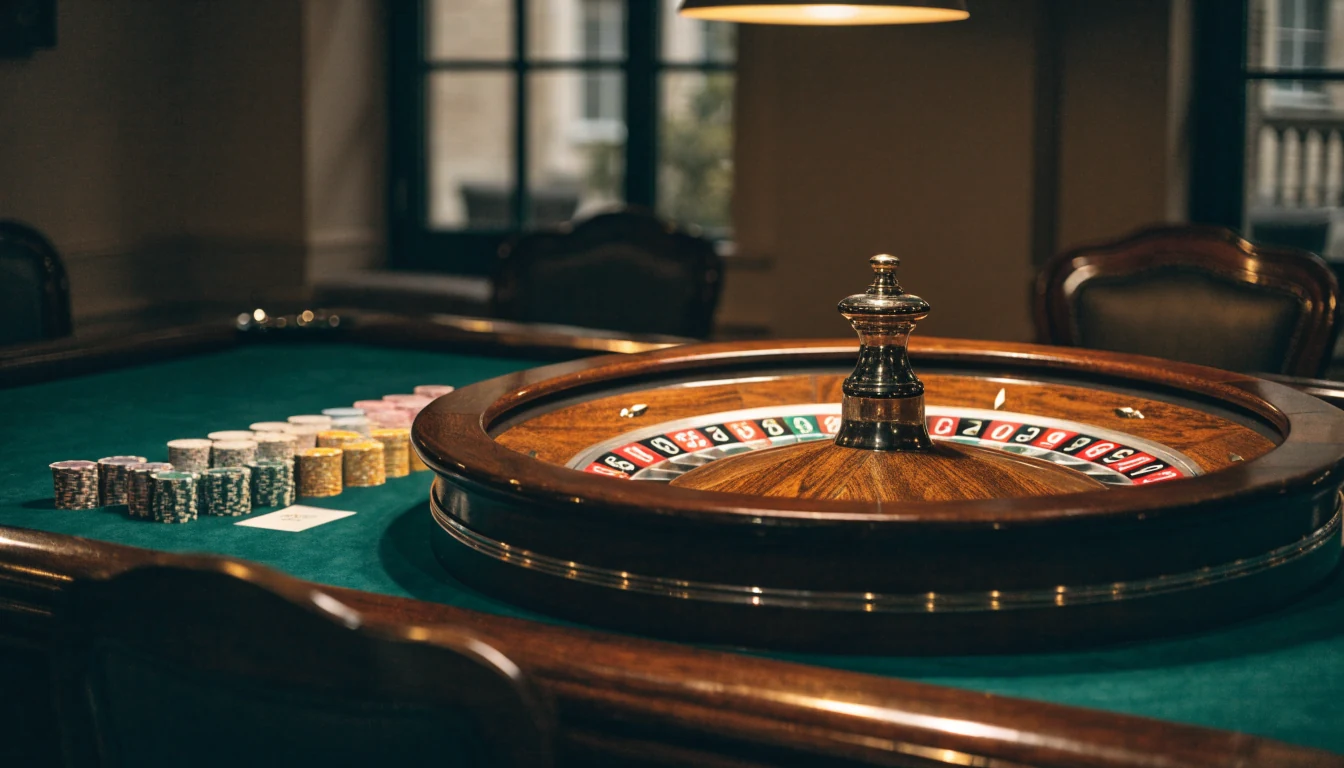
French Roulette’s zero rule affects qualifying even-money bets, while formats, limits and bonus terms shape the wider casino comparison.
French Roulette’s Rules and the La Partage Advantage
French roulette is distinguished by the way some tables handle a zero when an even-money wager is in play. The key rule is La Partage: if the ball lands on zero, half of a qualifying stake is returned rather than the whole wager being lost. This changes the cost of the zero outcome without changing the basic uncertainty of the spin.
An even-money wager is one that pays an amount equal to the stake when it wins. Red or black, odd or even, and high or low are familiar examples. On a winning result, the player receives the original stake back along with an equal amount in winnings. On an ordinary losing result, the stake is lost. La Partage changes only what happens when zero appears: half the stake is returned, and half is lost.
That distinction matters because zero does not belong to either colour, parity or high/low group. Without a special rule, an even-money bet loses in full when zero appears. With La Partage, the loss on that spin is reduced. The rule therefore changes the mathematical expectation of these bets, not the probability that any particular spin will land on a chosen result.
For qualifying even-money bets, La Partage reduces the house edge to 1.35%. This is the expected disadvantage built into the wager over repeated play, expressed as a share of the amount staked. It is not a prediction of what will happen in an individual session: a short run of results can differ substantially from the long-run expectation. Nor does the reduced edge mean that a bet is likely to win on the next spin. The ball’s result remains uncertain.
The rule is specific to the eligible wager. A player placing an even-money bet may receive the half-stake return on zero, while a different wager on the same spin may be settled under another rule. The presence of La Partage should therefore not be treated as a blanket reduction in the casino’s advantage on every bet at the table. The stated 1.35% edge applies to the even-money bets covered by the rule.
Casino Games: Slots, Table Games and Live Play
French roulette is also associated with En Prison, another zero-related rule. Together, La Partage and En Prison account for French roulette’s lowest house edge among standard variants. The precise handling of a wager under En Prison depends on the table’s stated rules, so its presence should be distinguished from La Partage rather than assumed to mean that every zero outcome receives the same treatment. The rule panel for the individual game is the relevant reference for how that table settles a bet.
In an online casino, the wheel and betting interface may make the game appear straightforward, but the written table rules still matter. The game title alone does not establish which zero rule applies to every wager. A table labelled French roulette should be checked for an explanation of La Partage and En Prison, including which bets qualify and how a zero result is resolved. Clear wording is particularly important when a game offers more than one way to place a wager.
The practical value of La Partage is therefore narrow but meaningful. It reduces the loss attached to zero for eligible even-money bets, improving their odds relative to the same bets without that protection. It does not remove the house edge, make outcomes predictable or guarantee that a player will finish ahead. The advantage is a property of the settlement rule, not a betting system or a way to influence the ball.
For anyone assessing French roulette online, the central question is not simply whether the game carries the French name. It is whether the table’s rules specify La Partage for the intended even-money wager, and how any other zero rule is applied. Once those terms are understood, the 1.35% house edge gives a precise measure of the advantage for the qualifying bet. It should not be transferred to wagers that do not receive the same treatment, or taken as a forecast of an individual result.
How Roulette Variants Change the Odds
Roulette’s house edge depends in part on how many pockets the wheel has and how the rules treat them. European roulette has 37 pockets: numbers 1 to 36 and one zero. American roulette adds a second green pocket, the double zero, bringing the total to 38. With standard payouts, that extra pocket makes an American spin less favourable to the player.
European Roulette
37 pockets (1-36 and one zero) with a house edge of 2.70%.
American Roulette
38 pockets (1-36, zero, and double zero) with a house edge of 5.26%.
Triple-Zero Roulette
Includes a third green pocket (000) and is associated with a 7.69% house edge.
The house edge on European roulette is 2.70%, compared with 5.26% on American roulette. These figures describe the long-run mathematical advantage built into the game, not the outcome of an individual spin. A run of wins or losses does not change the wheel’s pocket layout or make a particular result more likely on the next spin.
French roulette is distinguished less by a different set of numbered pockets than by rules that can soften the effect of zero on certain bets. La Partage and En Prison are why French roulette has the lowest house edge among standard variants. In particular, La Partage reduces the edge on even-money bets to 1.35%. That advantage is specific to eligible bets and should not be treated as a reduction applying to every wager on the table.
Some American tables use a third green pocket marked 000. This changes the layout again and is associated with a 7.69% house edge. That figure is reported in a specialist review, so it should be treated as a claim about the format described there, not as evidence that 000 wheels are a standard feature of UK online roulette. The number of green pockets shown in a game’s rules is therefore material: a familiar roulette label alone does not establish the wheel’s exact structure.
Hi-Lo Casino UK: What the Evidence Can Confirm
The practical comparison is between a single-zero layout, a double-zero layout and, in some reported games, a triple-zero layout, alongside the rules attached to each. European roulette offers a lower house edge than standard American roulette, while French roulette can improve the terms on eligible even-money bets through its zero rules. A higher pocket count generally worsens the mathematical position when payouts remain unchanged, but the applicable rules matter as well as the layout. For an online French roulette casino game, the displayed rules should make clear which wheel and zero-related conditions apply; the same principle holds when comparing French roulette with other casino formats.
Finding French Roulette at UK Online Casinos
A casino’s use of the label “French roulette” is a starting point, not proof of the rules or of the operator’s legal status. The game may be listed under roulette, live casino or a provider’s catalogue, so the lobby’s search and category tools can help locate it. Before opening a table, its information panel or rules should be checked for the name of the variant and the rules in force. A French-themed title alone does not establish that the table applies La Partage or En Prison.
The distinction matters because availability and legality are separate questions. A table can appear in a casino lobby without that fact establishing whether the operator may offer real-money gambling to people in Britain. For play with money, the relevant check is whether the operator holds a current operating licence from the UK Gambling Commission (UKGC) for the activity it provides. The UKGC regulates online casino activity in Great Britain. A platform without a valid UKGC licence cannot legally offer real-money live roulette to British residents, even if its website can be accessed from Britain or it displays French roulette.
Licensing Warning
A platform without a valid UKGC licence cannot legally offer real-money live roulette to British residents.
Checking the operator’s status
The Gambling Act 2005 provides the main framework for gambling in England, Wales and Scotland; Northern Ireland is outside that Act’s scope. Operators selling remote gambling to customers in Great Britain must hold the appropriate UKGC licence, irrespective of where the business is based. The location of a company, the currency shown on its site, or the presence of a familiar game provider does not replace that requirement.
The UKGC’s public register is the authoritative place to check an operator’s licence. The operator’s legal name and licence details should correspond with the register, and the licence should cover the relevant gambling activity. A logo or licence number displayed on a website is not sufficient on its own: the register should be consulted before a deposit is made. If the details cannot be matched, or the register does not show a current licence for the operator, the site should not be treated as authorised to provide real-money casino play in Great Britain.
This applies to live French roulette as well as other real-money casino games. A live stream, physical wheel or dealer presentation does not create an exception to the licensing requirement. Nor does a claim that a casino is “available in the UK” establish that it is lawfully serving British customers. Offshore sites that operate outside the UKGC system do not hold a UKGC licence; they cannot legally offer real-money live roulette to British residents.
Fastest Payout Online Casino UK: What to Verify
Account checks and safeguards
Age verification is another part of lawful access. UKGC-licensed operators must verify a customer’s age before allowing a deposit into a gambling account. A registration form or an age declaration is not, by itself, evidence that verification has been completed. The account process should make clear when identity and age checks are required and whether they have been resolved before funds can be deposited.
UKGC-licensed live casino operators must also make a set of account safeguards available. These include deposit limits, loss limits, session time reminders, reality checks, cool-off periods and GamStop self-exclusion. Remote operators must prompt new customers to set a financial limit before their first deposit and provide accessible controls for managing account-level limits. These tools concern the account as a whole, rather than the rules of a particular roulette table, and their availability should not be inferred merely from a casino’s licence badge.
Credit-card funding is not permitted for gambling with UKGC-licensed operators. The restriction also covers credit-card funds routed through a money service business, and operators must not accept wallet payments where the wallet allows credit-card money to be used for gambling. These payment rules are relevant when assessing whether an account is being offered under the British regulatory framework; a payment option does not make an otherwise unlicensed site lawful.
If a dispute arises, a UKGC licensee must have an internal complaints process and provide access to an approved Alternative Dispute Resolution service. UKGC-licensed casinos must also provide self-exclusion tools. The licence therefore concerns more than permission to display a roulette game: it places the operator within requirements for customer verification, account controls and complaint handling. Operators are also required to contribute to the Research, Education and Treatment levy.
Verifying Casino Safety
- Identify the specific roulette table and read its rules.
- Check the operator’s legal name on the UKGC public register.
- Verify that the licence covers the relevant gambling activity.
- Confirm the availability of account safeguards like deposit limits.
- Ensure age verification is completed before depositing funds.
For anyone looking for French roulette at a British-facing casino, the practical sequence is to identify the table, read its rules, and establish the operator’s status independently on the UKGC register before depositing. The game name can help locate a table, but only the operator’s licence and the applicable account safeguards establish whether real-money access is being provided within the British regulatory system.
Our top casino picks for the UK
- BeOnBetBonus: 100% up to €500 + 100 FS · Payout speed: 1-3 business days
- AmunbetBonus: Join now and get 450% up to 2,700 GBP + 450 FS · Payout speed: 1-3 business days
- DieselwinBonus: Welcome Pack 250% up to £4000 + 200 FS · Payout speed: 1-3 business days
- SlotoSportBonus: 500% up to £ 10 200+ 777 FS · Payout speed: 1-3 business days
- NightWinBonus: £900 + 400 free spins · Payout speed: 1-3 business days
- SpinFormulaBonus: 550% Up To £15,000 + 550 FS · Payout speed: 1-3 business days
- ZombillionBonus: Welcome Pack 250% up to £4000 + 200 FS · Payout speed: 1-3 business days
- EvoSpinBonus: 125% up to €2500 + 125 Free Spins · Payout speed: 1-3 business days
- x3betBonus: Welcome Pack 100% Up to £1.000 + 200 Free Spins · Payout speed: 1-3 business days
Comparing Casinos Beyond the Game Name
A casino listing French roulette is not necessarily straightforward to assess from the game title alone. Tables can differ in provider, rules and presentation, while the operator’s account terms and safeguards sit outside the game itself. A useful comparison therefore considers verifiable information about both the roulette product and the conditions under which it is offered. No single label establishes that one casino is better than another.
Check the game information
The game page should make the relevant return-to-player (RTP) information accessible. RTP is a theoretical measure of the proportion of stakes returned across extended play, not a forecast of what an individual session will produce. The published figure should be associated with the particular game or table being considered; a general casino statement does not establish the RTP of a specific roulette product.
Rules and payouts should also be available before play. A French roulette title is not, by itself, enough to confirm which rules apply to a particular table. Where several versions appear under similar names, the table’s information should make the applicable rules identifiable. Clear labelling helps distinguish a documented product from one whose description leaves material details uncertain.
Fast Payouts at UK Online Casinos: What Can Be Verified
The game information is only one part of the comparison. It is also useful to establish whether the displayed rules, RTP details and help information can be reached without first placing a bet. If key terms are difficult to locate, it becomes harder to make a meaningful assessment of the product.
Examine account controls
Account safeguards provide another basis for comparison. UKGC-licensed operators must prompt new customers to set a financial limit before their first deposit and make account-level limit controls accessible. These controls should be understandable and available within the account, rather than described only in general promotional language.
UKGC-licensed live casino operators must also offer deposit limits, loss limits, session time reminders, reality checks, cool-off periods and GamStop self-exclusion. The presence of a tool matters, but so does whether its function and route to access are clear. A comparison can record which controls are available and how the operator explains them, without assuming that the mere presence of a tool guarantees a particular outcome.
Age verification is a further practical point: operators must verify a customer’s age before allowing funds to be deposited into a gambling account. Payment restrictions are also relevant to account terms. UKGC licensees cannot accept credit cards for gambling, including credit-card funds routed through a money service business; they cannot accept wallet payments where the wallet allows credit-card funds to be used for gambling. These are requirements, not optional features that distinguish a more generous casino.
Assess the operator, not just the table
A current UK Gambling Commission operating licence is a basic condition for a casino legally serving British players. The licence number can be checked against the Commission’s public register before depositing. A platform without a valid UKGC licence cannot legally offer real-money live roulette to British residents. The game’s availability or familiar branding does not establish the operator’s regulatory status.
Do
- Verify the UKGC licence on the public register.
- Check for accessible RTP and table rules before playing.
- Use provided account-level limit controls.
Don’t
- Rely on a licence logo or number displayed on the website alone.
- Assume a “French roulette” label guarantees La Partage rules.
- Use credit cards to fund a UKGC-licensed gambling account.
Complaints arrangements are another concrete point to review. UKGC licensees must provide an internal complaints process and access to an approved Alternative Dispute Resolution service. Published instructions should explain how a complaint is raised and how the independent dispute route can be accessed if the internal process does not resolve it. The existence of those procedures is more informative than broad claims about customer service.
Responsible-gambling information should be assessed in the same practical way. UKGC-licensed casinos must provide tools including self-exclusion, and the live-casino safeguards described above are part of the required offer. Operators are also required to contribute to the Research, Education and Treatment levy. These obligations form part of the regulatory framework; promotional claims do not replace them.
A comparison of French roulette casinos is therefore strongest when it separates observable features from marketing language. Accessible RTP and rules describe the game; clear account controls and complaints routes describe the operator’s arrangements; a verified UKGC licence establishes whether the operator is authorised to serve the British market. Where any of these details cannot be found or checked, the available evidence is insufficient to support a confident comparison.
Table Limits from Low Stakes to Higher-Tier Play
A table’s minimum stake determines the smallest permitted wager, not the full range of stakes available. That distinction matters when looking for French roulette at a low entry point: a low minimum may make a table accessible for small wagers, while its maximum stake can still be relevant to players considering larger amounts. The displayed limit applies to that particular table, so the game name alone does not establish how much can be staked.
Online Keno Casinos in the UK: How to Compare
Evidence cited in a specialist review places some UK live roulette minimums as low as 10p. It also reports that auto-roulette and speed roulette tables can have a 5p entry point. These are reported examples, not a guarantee that every operator or table offers those amounts. Availability can depend on the specific game listing, and the stated minimum should be checked before play. A French roulette title may appear at more than one stake level, so checking the individual table details is more informative than relying on a general category label.
Low-stake tables
Low-stake French roulette is generally understood as play where the table’s entry requirement is modest relative to the player’s intended wager. The reported minimums show that small starting stakes can be available in some formats, including live tables and certain automated options. They do not establish that every French roulette game has the same minimum, or that a particular minimum will remain available across all tables.
The minimum should also be read alongside the table’s maximum. A low entry point does not by itself describe the whole permitted range, and it does not indicate how much a player will spend over a session. Those are separate considerations. Where the interface presents a limit for each table, that figure is the relevant one for determining whether a particular stake is accepted.
Standard limits
Operators may group tables by stake range or present limits directly in the game lobby. Without a common definition, the label cannot reliably be compared across different casinos.
Terms such as "standard" or "regular" lack a common definition and cannot be reliably compared across different casinos.
For that reason, the table’s displayed minimum and maximum provide clearer information than terms such as standard or regular. A minimum that suits one player may not suit another, while a maximum can matter even when the intended stake is well below it. The range shown for the selected game is the practical basis for judging whether it fits a particular budget.
Higher-limit play
A high-limit French roulette table is intended for larger permitted stakes than a lower-limit table, but the label alone does not specify a threshold. Higher-tier listings should therefore be treated as descriptions of relative stake range, not as a promise that a particular table accepts a particular wager.
The distinction between entry minimum and upper limit remains important here. A table may permit larger wagers while retaining a minimum that is accessible to a broader range of players; conversely, a table with a higher minimum may not necessarily have the highest maximum. Both ends of the stated range need to be considered rather than inferring one from the other.
Across low, standard and higher-tier play, the useful comparison is therefore the limit shown for the individual French roulette table. The reported 10p and 5p minimums indicate that low entry points have been documented, but they should not be treated as universal market conditions. A table’s own displayed limits are the relevant guide to the stakes it permits.
Live, RNG and Automated Roulette Formats
The distinction between live, RNG and automated roulette concerns how each spin is produced and presented. A French roulette title may appear in more than one format, but the label alone does not establish whether a physical wheel or software determines the result. The game description should identify the format before play begins.
Live Casino Lightning Roulette in the UK: Licensing
In live dealer roulette, a camera streams a real wheel from a studio. A human dealer releases the ball, and the result follows its physical movement around the wheel. The broadcast makes the spin visible as it happens, while the betting interface records selections and displays the outcome. A live French roulette casino therefore combines a streamed wheel with digital controls; it is not simply a computer animation of a spin.
The pace of a live table depends on the dealer’s sequence of accepting bets, spinning the wheel and settling the result. A standard live table is reported at 80–100 spins per hour. Speed roulette is a faster live format: a specialist review reports more than 150 spins per hour, compared with that standard-table range. These figures describe reported operating rates, not a guaranteed pace at every table. The speed format shortens the interval between rounds, while retaining a real wheel and dealer.
RNG roulette uses a random number generator to simulate spins rather than showing a physical ball drop. The outcome is generated by software, so there is no studio feed or dealer-led wheel sequence. This format supports faster play and can offer lower minimum stakes, with some games starting at 10p. Its speed can also make rounds follow one another with little of the waiting associated with a live broadcast.
For American roulette, RNG games are reported to run at 150 to 200 or more spins per hour, while live dealer play is reported at 50 to 60 spins per hour. The comparison illustrates how the format can affect pace, but the figures concern American roulette and should not be treated as a measured rate for every French roulette game. Actual speed depends on the particular game and its interface.
Live Dealer
Physical wheel and dealer streamed via camera; typically 80–100 spins per hour (or 150+ for Speed Roulette).
RNG Roulette
Software-simulated spins without a studio feed; supports faster play and lower minimum stakes.
Automated Roulette
May use a physical wheel where the spin is automated, removing the need for a live dealer on camera.
Automated roulette sits between a streamed live table and a fully simulated RNG game. The term can refer to play around a physical wheel where the spin is automated rather than conducted by a live dealer on camera. It should not be assumed to mean the same thing as RNG roulette: the former can involve a real wheel, whereas RNG play generates the result through software. Product descriptions matter because labels such as “auto” or “live auto” may be used differently across casino menus.
For anyone comparing an online live French roulette casino with automated or RNG versions, the relevant distinction is the source and presentation of each result, followed by the pace of play. Live play shows a physical ball drop; RNG play simulates the spin; automated formats may remove the live dealer while retaining a physical wheel. Faster rounds do not alter the underlying randomness of roulette, but they can change how quickly decisions and outcomes arrive.
Bonus Wagering Rules for Roulette
Roulette can contribute to bonus wagering requirements, but the amount credited depends on the operator’s terms and the game format. An online casino offering French roulette may therefore treat a wager on that table differently from a wager on an RNG version, even when both are roulette.
Across UK operators, roulette wagers are commonly counted at 10% to 20% of the wagering requirement. This means that only part of the qualifying stake is credited towards completing the bonus conditions. The stated game weighting, rather than the table’s name alone, determines how quickly roulette play contributes.
Live Baccarat Online Casinos in the UK: Licensing
Live roulette can be treated less favourably under some offers. A specialist review of UK no-deposit bonus terms reports that some operators exclude live roulette altogether; where it is included, the reported game weighting is 0–10%. This is a specific account of those terms, not a universal rule. The bonus conditions should identify whether French roulette is eligible and whether live and RNG tables have different weightings.
A specialist review also reports that, from January 2026, UK regulations cap bonus wagering requirements at a maximum of 10x. The terms attached to an individual offer still matter: a regulatory ceiling does not establish that every operator uses the same requirement, or that every roulette game qualifies.
Before bonus funds are used, the relevant conditions should be checked for the wagering requirement, roulette’s game weighting, and any exclusions applying to live tables or no-deposit offers. A low weighting can mean that roulette play makes only limited progress towards the requirement, while an exclusion means it makes none.
Premium Tables and Account-Level Limits
A premium French roulette table is best understood as a higher-stake setting, not as a separate set of rules or a guarantee of a particular betting ceiling. The label alone does not establish the table’s minimum or maximum stake: those terms need to be read in the specific game and account information. French roulette’s table status also does not alter the operator’s obligations around customer safeguards.
For UKGC-licensed operators, account controls apply across play rather than disappearing at a premium table. Operators must provide deposit and loss limits, session time reminders, reality checks and cool-off periods, alongside GamStop self-exclusion. New customers must be prompted to set a financial limit before making their first deposit, and account-level limit controls must remain accessible. Higher stakes do not remove these measures or make a table exempt from them.
Attention A premium table label governs the permitted stake in that game, but it does not allow a player to exceed their established account-level limits.
This distinction matters because a table limit governs the permitted stake in that game, while an account limit constrains gambling at account level. Where an account limit is lower than a table’s maximum, the account control remains relevant; a premium label should not be treated as permission to exceed it. The terms shown by the operator are therefore more informative than the table category itself.
Real-money roulette offered to British residents requires a valid UK Gambling Commission licence. A platform without one cannot legally offer real-money live roulette to those residents. The premium designation does not change that position. These points define the practical meaning of higher-tier play: stake conditions are table-specific, while account safeguards remain part of the regulated service.
Bet Types, Payouts and the Limits of Betting Systems
Roulette bets differ in how many numbers they cover and how much they return when they win. Inside bets are placed on specific numbers or small groups on the layout; outside bets cover broader categories. The stated payout is a fixed feature of the bet, not evidence that it is more likely to win.
A straight-up bet selects one number. If that number wins, the payout is 35:1 on both European and American roulette. A split bet covers two adjacent numbers and pays 17:1. A street bet covers a horizontal row of three numbers and pays 11:1. These bets concentrate a wager on a narrow part of the layout, while the broader coverage of an outside bet comes with a lower stated payout.
Red or black, odd or even, and high or low are outside bets, each paying 1:1. Their broader coverage does not remove the uncertainty of the spin: the ball’s final position remains a matter of chance. The payout describes what a winning wager returns relative to the stake; it does not guarantee a particular result or make a sequence of results predictable.
Live Blackjack Online Casinos in the UK: Licensing and Play
For someone considering how to play French roulette online, this distinction is central. Choosing a bet changes the numbers covered and the payout attached to a win. It does not provide control over where the ball lands. The same separation applies in a casino French roulette game: the layout offers different ways to organise a wager, but those choices do not alter the random outcome of an individual spin.
What betting systems can and cannot do
Betting systems attempt to organise wagers across successive spins. The Martingale is one such system: after each loss, the next bet is doubled. Its logic depends on a later win recovering earlier losses, but that sequence is not assured. A losing streak can negatively affect a player’s bankroll, and escalating bets may therefore create substantial pressure before a recovery occurs.
The weakness is not limited to the Martingale. Any system based on previous results assumes that a past sequence can provide useful direction for the next spin. Roulette odds are determined solely by chance, so no strategy can predict the final outcome. A run of one colour, number range or bet result does not establish that the opposite result is due.
This does not mean that bet selection is meaningless. It determines which outcomes count as a win and which payout applies if they occur. It can also shape how quickly a bankroll is exposed to losses, depending on the stakes chosen. But a staking pattern cannot convert chance into a reliable forecast, and a larger prospective payout does not by itself establish a better expectation of winning.
The distinction between payout and prediction is therefore important. Payouts specify the return attached to a winning bet; betting systems specify how stakes may change from one spin to another. Neither changes the uncertainty of the next result. A system can describe a player’s approach, but it cannot make roulette outcomes knowable in advance.