
 Available in GB
Content
- The 72-Hour Window: What Love Casino Promises and What Players Report
- Step-by-Step Withdrawal Process at Love Casino
- Fiat Withdrawal Methods: Bank Transfer, Card, and E-Wallet Timelines
- Crypto Withdrawals: BTC, ETH, LTC, and XRP Payout Speeds
- Giftoza and Paytechno: Why Third-Party Processors Raise Red Flags
- Documented Withdrawal Complaints: Patterns and Outcomes
- Frequently Asked Questions
- In-depth guides in this section
The 72-Hour Window: What Love Casino Promises and What Players Report
In twelve years of reviewing casino operations, the withdrawal process is where I have seen the widest gap between what operators promise and what players experience. The deposit is instant. The withdrawal is where the relationship gets tested. Love Casino states a processing time of up to 72 hours for withdrawals. That figure deserves scrutiny — not because 72 hours is unusually long, but because the word “up to” is doing a great deal of heavy lifting in that sentence.
A 72-hour window at a UKGC-licensed operator means something different from 72 hours at a Curaçao-licensed site. UKGC operators are subject to licence conditions that require withdrawals to be processed without unnecessary delay, and the Commission actively investigates complaints about withdrawal obstruction. At offshore operators, the enforcement mechanism is weaker. The Curaçao Gaming Authority, restructured under the LOK reform in 2025, has improved its regulatory framework, but its complaint resolution capacity remains far smaller than the UKGC’s. If a withdrawal stalls at a UKGC site, you have a regulator with a proven enforcement record to escalate to. If it stalls at a Curaçao-licensed site, your options narrow considerably.
Player reports on Love Casino’s withdrawal times are mixed. Some report receiving funds within 24 to 48 hours. Others describe waits of five to seven days, with customer support citing “verification delays” or “pending security checks.” UK online gambling generated £7.8 billion in gross gambling yield in the year to March 2025, and the volume of transactions processed across the sector is enormous. But volume alone does not explain inconsistent withdrawal times at a single operator — that usually points to either understaffed payment operations or deliberate friction designed to encourage players to cancel withdrawals and continue playing.
The phenomenon of “reverse withdrawals” — where a player cancels a pending withdrawal and returns the funds to their playable balance — is well documented in industry research. Some operators design their withdrawal processes with extended pending periods precisely to maximise reverse withdrawal rates. A 72-hour pending period, with no option to lock the withdrawal, creates a window during which every notification, email, and interface element nudges the player to reconsider. I have seen internal operator reports where reverse withdrawal rates exceeded 20% of all withdrawal requests. That is not accidental design.
What matters is not just the stated timeline, but the full journey: from initiating the withdrawal, through verification and processing, to funds actually arriving in your account. Each stage introduces potential delays, and each delay has both a legitimate explanation and a less charitable one. The rest of this guide walks through every stage, every method, and every documented problem.
Verification comes first: the KYC requirements.
Step-by-Step Withdrawal Process at Love Casino
I keep a checklist for every operator I review, mapping the withdrawal journey from request to receipt. Love Casino’s process follows a pattern common among Curaçao-licensed operators, but with a few distinctive elements worth flagging.
The first stage is the withdrawal request itself. Log into your account, navigate to the cashier or banking section, select your preferred withdrawal method, enter the amount, and submit. At this point, the request enters a “pending” status. The pending period is the first variable — some operators process withdrawals out of pending within minutes, others hold them for 24 to 48 hours. During the pending period, some operators allow you to cancel the request. As I discussed in the previous section, this is a design feature with clear behavioural implications.
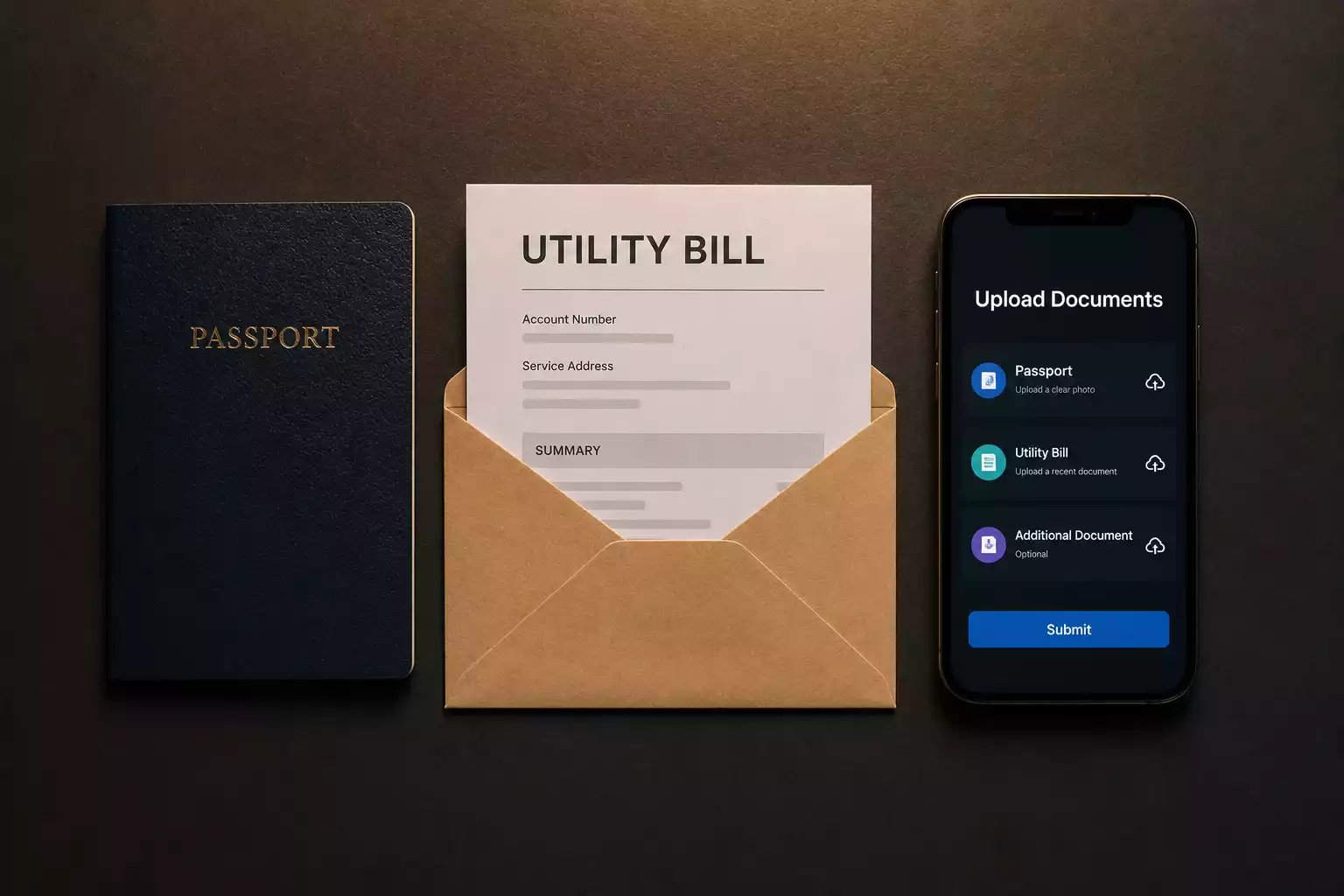
Stage two is verification, often called KYC — Know Your Customer. If you have not previously verified your identity, the first withdrawal will trigger a document request. Standard requirements include a government-issued photo ID (passport or driving licence), proof of address (utility bill or bank statement dated within three months), and proof of the payment method used for deposits (a photo of the card front with the middle digits obscured, or a screenshot of the e-wallet account). At UKGC operators, verification is often completed before or at the point of first deposit. At offshore operators, it frequently happens at withdrawal, which creates a structural delay on first payouts.
The third stage is internal processing. Once verified, the withdrawal moves from pending to “processing.” This is the operator’s internal review and payment initiation stage. The operator checks for bonus abuse, verifies that wagering requirements have been met, and initiates the payment through their payment processor. How long this takes depends on the operator’s internal processes and staffing. At busy periods, processing queues can extend by days.
Stage four is the payment processor’s handling time. The operator sends the payment instruction to a bank, card network, e-wallet provider, or crypto exchange. Each has its own processing timeline. Bank transfers typically take one to five business days. Card refunds can take three to five business days. E-wallets like Skrill or Neteller often process within 24 hours. Crypto transactions depend on network congestion and the number of confirmations required.
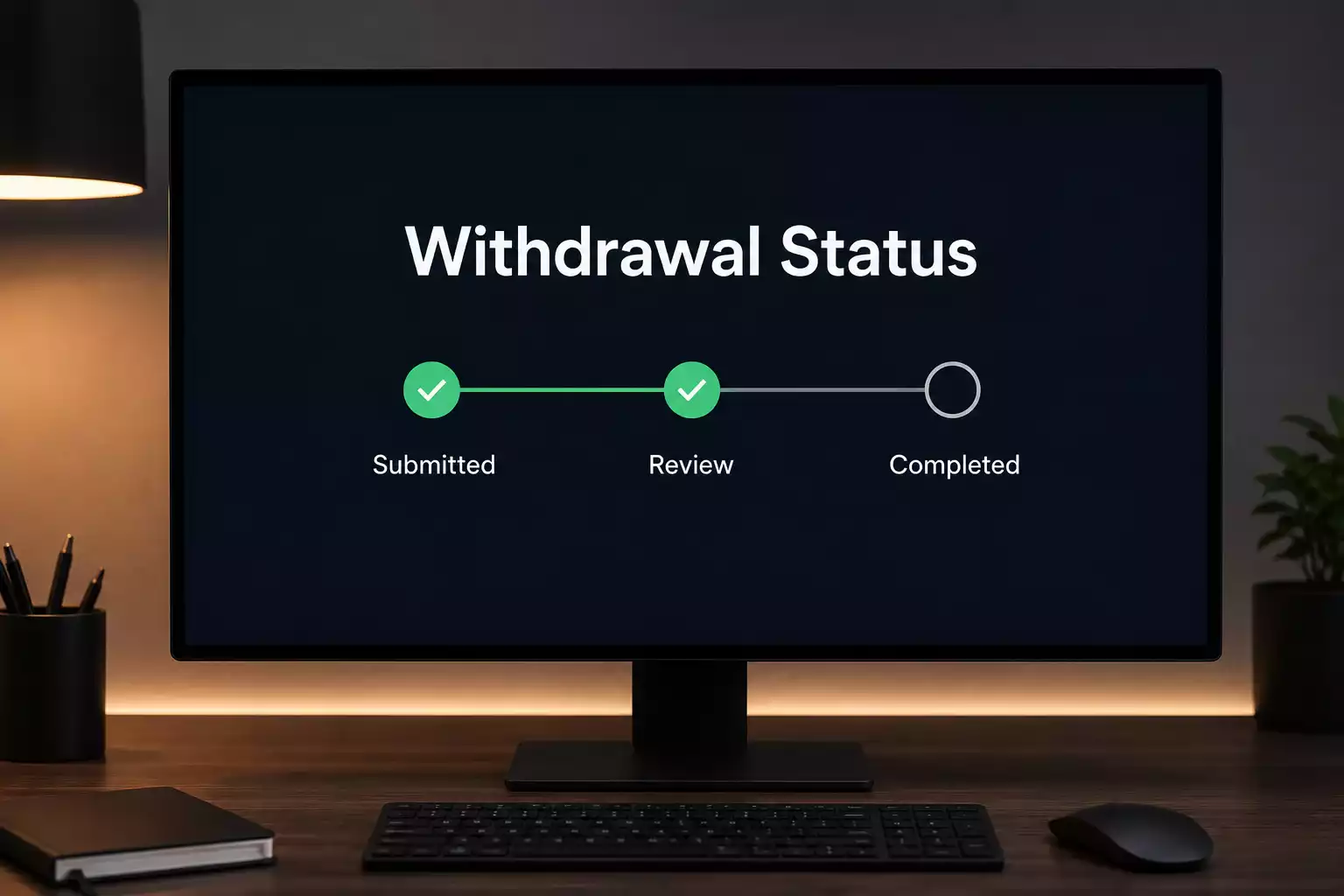
The fifth stage is receipt — when the funds actually appear in your account. Between the operator’s processing time and the payment network’s clearing time, the total journey from request to receipt can range from a few hours (best-case crypto) to seven or more business days (worst-case bank transfer with verification delays). Understanding these stages is essential because when a withdrawal is delayed, identifying which stage is stalled tells you whether the problem is with the operator, the payment processor, or the banking network.
One thing I always check is whether the operator provides real-time status updates through the account dashboard. Operators that show which stage your withdrawal has reached — pending, verified, processing, sent — demonstrate a level of operational transparency that builds confidence. Operators that show only “pending” or “complete” with no intermediate steps are harder to hold accountable when delays occur.
Fiat Withdrawal Methods: Bank Transfer, Card, and E-Wallet Timelines
The withdrawal method you choose determines roughly half of the total processing time. I have benchmarked fiat withdrawal speeds across dozens of operators, and the differences are more significant than most players realise.
Bank transfers are the most common method for larger withdrawals. At Love Casino, bank transfer withdrawals are reported to take three to five business days after the operator’s internal processing is complete. That is consistent with industry norms, but “business days” excludes weekends and bank holidays, so a withdrawal requested on a Thursday evening might not clear until the following Wednesday or Thursday. For UK players, the receiving bank’s clearing process adds another variable — most domestic transfers settle within one business day via Faster Payments, but international transfers from offshore operators often route through correspondent banks that add one to two days.
Card withdrawals (Visa debit refunds) carry a similar timeline — typically three to five business days from the point the operator initiates the payment. MasterCard withdrawals can be slower, and some offshore operators do not support card withdrawals at all, forcing players who deposited by card to withdraw via bank transfer or e-wallet instead. This mismatch between deposit and withdrawal methods is a recurring source of player frustration across the offshore sector.
E-wallets — Skrill, Neteller, and similar services — generally offer the fastest fiat withdrawal times. Once the operator sends the payment, e-wallet credits typically appear within 24 hours, and often within a few hours. The trade-off is that e-wallets charge their own fees for currency conversion and bank transfers out of the e-wallet to a traditional bank account. Those fees can be 1% to 3.99%, depending on the service and the withdrawal amount. A player withdrawing £500 via Skrill might pay £5 to £20 in fees to ultimately move the money to their bank — a cost that is rarely mentioned in operator marketing.
Leading crypto casinos have reported a 38% reduction in payout disputes during early 2025 — a figure that partly reflects the faster settlement times and reduced intermediary friction of cryptocurrency payments. Fiat methods, by contrast, involve multiple intermediaries, each with its own processing window and fee structure. The more intermediaries in the chain, the more potential points of delay and the harder it becomes to trace where a delayed payment is stuck.
My practical recommendation: if you play at an offshore operator and want the fastest fiat withdrawals, e-wallets are the strongest option despite the fees. For larger amounts where fees become significant, bank transfers offer lower costs but longer timelines. And always confirm that the withdrawal method you plan to use is actually available for withdrawals, not just deposits — the two lists do not always match.
Crypto Withdrawals: BTC, ETH, LTC, and XRP Payout Speeds
Three years ago, crypto withdrawals at online casinos were a novelty. Now they account for a significant portion of the market. Crypto gambling represents 30% of all online wagers globally — a figure that has grown from 20% in 2022 — and the primary driver is speed: cryptocurrency transactions settle faster than any traditional banking method, with no intermediary banks, no card network processing, and no currency conversion delays.
Love Casino lists support for BTC, ETH, LTC, and XRP. Each cryptocurrency has different network characteristics that affect withdrawal speed. Bitcoin transactions typically require three to six network confirmations before the receiving wallet credits the funds. At current block times, that means roughly 30 to 60 minutes after the operator broadcasts the transaction. Ethereum is faster — usually 12 to 15 minutes for the standard number of confirmations. Litecoin settles in roughly 15 to 30 minutes. XRP is the fastest of the four, with transactions confirming in three to five seconds under normal network conditions.
These are the network processing times. The operator’s internal processing sits on top of that. If Love Casino takes 24 hours to approve and broadcast the crypto withdrawal, the fast network settlement becomes less meaningful — you are still waiting a day before the blockchain even sees the transaction. This is why I always distinguish between “operator processing time” and “network settlement time” when evaluating crypto withdrawal speed. The former is under the operator’s control. The latter is determined by the blockchain.
Blockchain technology has also delivered measurable improvements in transaction dispute rates. The immutable transaction record on a public ledger means that neither the player nor the operator can dispute whether a payment was sent — the blockchain provides definitive proof. This transparency has reduced fraud in crypto casino operations by an estimated 60% compared to traditional payment methods, where chargeback disputes and payment reversals create ongoing friction between operators and players.
There are risks specific to crypto withdrawals. Wallet address errors are irreversible — send funds to the wrong address and they are gone permanently. Network congestion can spike unpredictably, increasing transaction fees and confirmation times. And the value of the cryptocurrency itself fluctuates between the time you request the withdrawal and the time you convert it to fiat currency. A withdrawal of 0.01 BTC might be worth £380 when requested and £365 by the time you sell it. This exchange rate risk is unique to crypto and does not apply to fiat withdrawals.
For players who already hold and use cryptocurrency, crypto withdrawals at Love Casino offer a genuinely faster and more transparent payout path than fiat alternatives. For players unfamiliar with wallet management and exchange rate dynamics, the learning curve and the risks may outweigh the speed advantage. I cover the full mechanics of crypto payment processing at Love Casino separately, including deposit-side considerations that affect withdrawal eligibility.
Giftoza and Paytechno: Why Third-Party Processors Raise Red Flags
This is the section most affiliate reviews skip entirely, and it is the one that matters most. When I audit an operator’s payment infrastructure, the single biggest indicator of potential problems is the identity of the payment processor handling player funds. At Love Casino, some player withdrawals route through third-party processors including entities identified as Giftoza and Paytechno. Neither name is well-known in mainstream payment processing, and that alone warrants careful examination.
At a well-regulated UKGC operator, the payment flow is relatively straightforward. The operator holds player funds in segregated accounts at a recognised financial institution. Withdrawals are processed through established payment service providers — companies like Worldpay, Trustly, or PayPal — that are themselves regulated by the Financial Conduct Authority or equivalent bodies. The player can trace the payment from the operator through the processor to their bank. Each entity in the chain is accountable to a regulator.
At offshore operators, the payment chain is often longer and less transparent. The operator may use one processor for deposits and a different one for withdrawals. The withdrawal processor may be a shell company in a jurisdiction with minimal financial oversight. The player’s funds pass through entities they have never heard of, registered in countries they may not be able to identify on a map. When a withdrawal fails or is delayed, the player’s complaint is directed at the operator, but the actual blockage may be at a processor two steps removed.
Tim Miller, Executive Director of the UK Gambling Commission, addressed this dynamic directly in his ICE Barcelona speech in early 2026. His position was clear: if affiliates are driving traffic to operators whose supply chains include unlicensed or poorly regulated entities, consumer protection and revenue protection become inseparable concerns. The implication is that the entire ecosystem around an offshore operator — from the marketing affiliate to the payment processor — determines the level of risk a player faces.
Player complaints about Love Casino frequently mention unexpected payment processor names appearing on bank statements. Some players have reported receiving funds from entities with no apparent connection to the casino brand. This is not necessarily evidence of fraud, but it is evidence of an opaque payment infrastructure. When you cannot identify who is sending you money or why the sender name does not match the casino name, you lose the ability to resolve disputes efficiently. Your bank may flag the transaction. Your card issuer may reverse it. And if you need to pursue a complaint, you are dealing with an entity in a jurisdiction where you have no consumer protection standing.
My advice is blunt: before depositing at any operator, make a small test deposit and then immediately request a withdrawal. See which entity processes it. Note the name that appears on your statement. If the processor is unrecognisable, unregulated, or registered in a jurisdiction you cannot verify, factor that into your risk assessment. The payment chain is the operator’s circulatory system. If it is opaque, everything else — bonuses, game selection, customer support — becomes secondary.
Documented Withdrawal Complaints: Patterns and Outcomes
I started tracking withdrawal complaints about Love Casino across public review platforms roughly eighteen months ago. The volume is not enormous — this is not a tier-one operator by market share — but the patterns are consistent enough to warrant attention.
The most common complaint category is delayed processing. Players report submitting withdrawal requests and receiving no status update for five to seven days, sometimes longer. Customer support responses during these periods typically cite ongoing verification, security reviews, or processing backlogs. In some cases, players report being asked to submit additional verification documents after their initial KYC was supposedly approved — a pattern sometimes called “rolling verification” that extends the withdrawal timeline indefinitely.
The second pattern involves partial payments. Some players report receiving withdrawals in instalments rather than as a single lump sum. A withdrawal request for £1,000 might arrive as two payments of £500 spread across a week. This can occur for legitimate operational reasons — payment processor limits, for example — but it adds complexity and delays to what should be a straightforward transaction. It also makes dispute resolution harder, because the player has received some funds and must argue about the remainder.
A third pattern involves account closures or balance confiscations tied to vague terms of service violations. Players report having accounts closed and balances voided after winning, with the operator citing breaches of bonus terms or “irregular play patterns.” Without an independent adjudicator or regulatory body with enforcement power over the operator, the player has limited recourse. The Gambling Commission, in financial year 2024–25, delivered 741 cease-and-desist and disruption notices against unlicensed operators and reported 397,527 URLs to search engines, with 266,667 URLs removed. That enforcement activity is significant, but it targets operator existence, not individual player complaints.
What is notable about Love Casino withdrawal complaints is not any single incident — it is the consistency of the patterns across different players, time periods, and review platforms. Delayed processing, opaque communication, unexpected processor names, and post-win account reviews appear repeatedly. Each individual case might have a reasonable explanation. The pattern suggests systemic operational practices rather than isolated incidents.
If you are considering playing at Love Casino or any offshore operator, document everything. Screenshot your balance before and after each session. Save all email and live chat transcripts. Record the date, time, and amount of every deposit and withdrawal request. This documentation is your only leverage if a dispute arises — and at an operator outside UKGC jurisdiction, it is the only evidence you can present to your bank or card issuer if you need to pursue a chargeback.
When the Withdrawal Clock Actually Starts
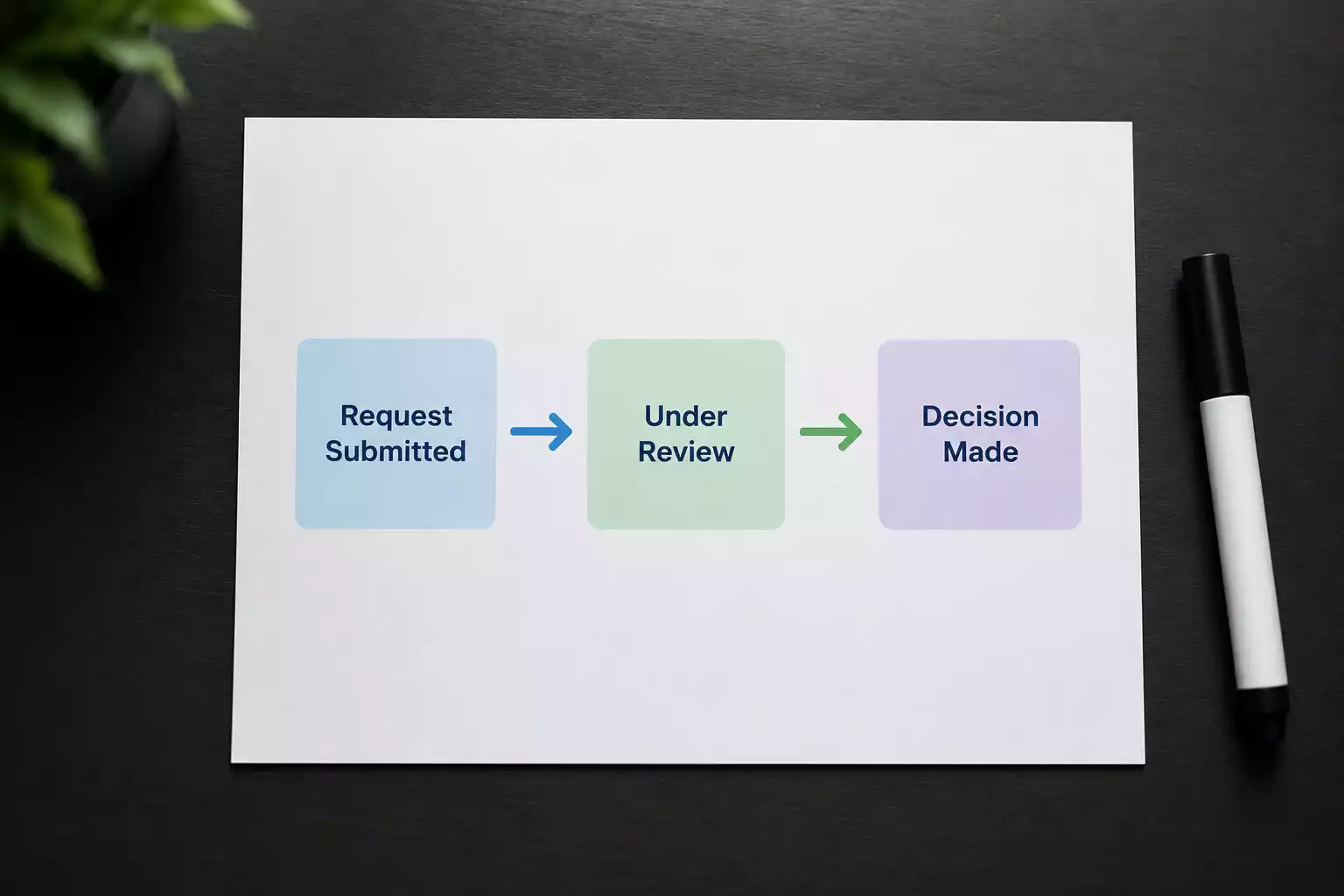
The cashier’s “withdrawal processing time” figure measures the operator-side leg of the transaction, not the wall-clock interval the player perceives. A withdrawal moves through three sequential stages: pending (the request is queued, frequently with a cancellation window the player can use to reverse it back to playable balance), processing (the operator’s payments team is reviewing and releasing the funds), and settlement (the funds are in transit on the payment rail). The published processing window typically describes only the middle stage. A “24-hour withdrawal” can therefore translate to a 72–96 hour player experience once the pending and settlement legs are added.
The pending stage is the one offshore brands most heavily extend in practice. Some operators set the default pending window at 48 hours specifically to give the player time to “change their mind” — i.e., to gamble the withdrawal back. Players reading the published 24-hour processing window are often unaware that the clock does not start until that pending window closes.
Slow Withdrawals as a Pattern Signal
An isolated delayed withdrawal can be a verification or rail-side glitch. A pattern of delayed withdrawals — across players, across rails, across months — is a different signal. The pattern indicates either a liquidity problem at the operator, an over-reliance on KYC-as-friction (where verification requests are deployed selectively against larger withdrawals), or a deliberate processing-time stretch as a retention tactic. Independent dispute aggregators document each of these patterns at various offshore brands.
For a player evaluating an unfamiliar offshore operator, the most useful signal is the spread of withdrawal-time reports rather than the median. A median 48 hours with a long tail of 14-day reports is structurally worse than a median 72 hours with a tight distribution around it; the long tail is where money disappears into the operator’s procedural friction.
Tactical Steps to Reduce Withdrawal Friction
Five operational practices materially reduce withdrawal friction at offshore brands. Complete KYC verification before the first withdrawal request — even before the first deposit if the operator allows it — so that the verification clock has finished running before the withdrawal is queued. Match the withdrawal method to the deposit method where the operator permits, even if a different rail looks faster, because mismatched-rail withdrawals trigger additional review steps. Avoid bonus balances at withdrawal time: if a bonus is still active or not yet fully wagered, the cashier may either refuse the withdrawal or void the bonus before processing. Use crypto rails for larger withdrawals where available; once the operator releases, settlement is minutes rather than days. Document each request — timestamp, amount, method, transaction reference — so that if a delay extends into a complaint, the documentation supports the case.
Frequently Asked Questions
What are the minimum and maximum withdrawal amounts at Love Casino?
Minimum and maximum withdrawal limits at Love Casino vary by payment method and are subject to change. Offshore operators frequently adjust these limits without prominent notice. Check the operator’s cashier section for current figures before initiating a withdrawal. Be aware that maximum withdrawal limits per day, week, or month can significantly delay large payouts — a £5,000 weekly cap on a £15,000 balance means three weeks of waiting at minimum.
Why do some Love Casino withdrawals go through Giftoza or Paytechno?
Love Casino uses third-party payment processors for some transactions. Giftoza and Paytechno are entities that have appeared on player bank statements in connection with Love Casino withdrawals. The use of third-party processors is common at offshore operators, but it introduces additional opacity into the payment chain and can complicate dispute resolution if a withdrawal fails or is delayed.
Is Love Casino’s crypto withdrawal faster than bank transfer?
Crypto withdrawals are generally faster than bank transfers once the operator initiates the payment. Bitcoin settles in roughly 30 to 60 minutes, Ethereum in 12 to 15 minutes, and XRP in seconds. Bank transfers take one to five business days after initiation. However, the operator’s internal processing time applies equally to both methods, so a 24-hour processing delay affects crypto and fiat withdrawals alike.
What should I do if my Love Casino withdrawal is delayed beyond 72 hours?
Document the withdrawal request with screenshots including the date, amount, and method. Contact customer support via live chat and save the transcript. If support does not resolve the delay within a further 48 hours, escalate to the Curaçao Gaming Authority if the operator holds a valid CGA licence. For UK players, consider contacting your bank or card issuer about a chargeback if funds were deposited by card and the operator is unresponsive.
What can I do to speed up a slow withdrawal?
Complete KYC verification before requesting the withdrawal so the verification clock has already finished; match the withdrawal rail to the deposit rail where the operator allows; avoid active bonus balances at withdrawal time; use crypto rails for larger withdrawals where available; and document each request (timestamp, amount, method, reference) so that any subsequent complaint has supporting evidence.