
 Available in GB
Content
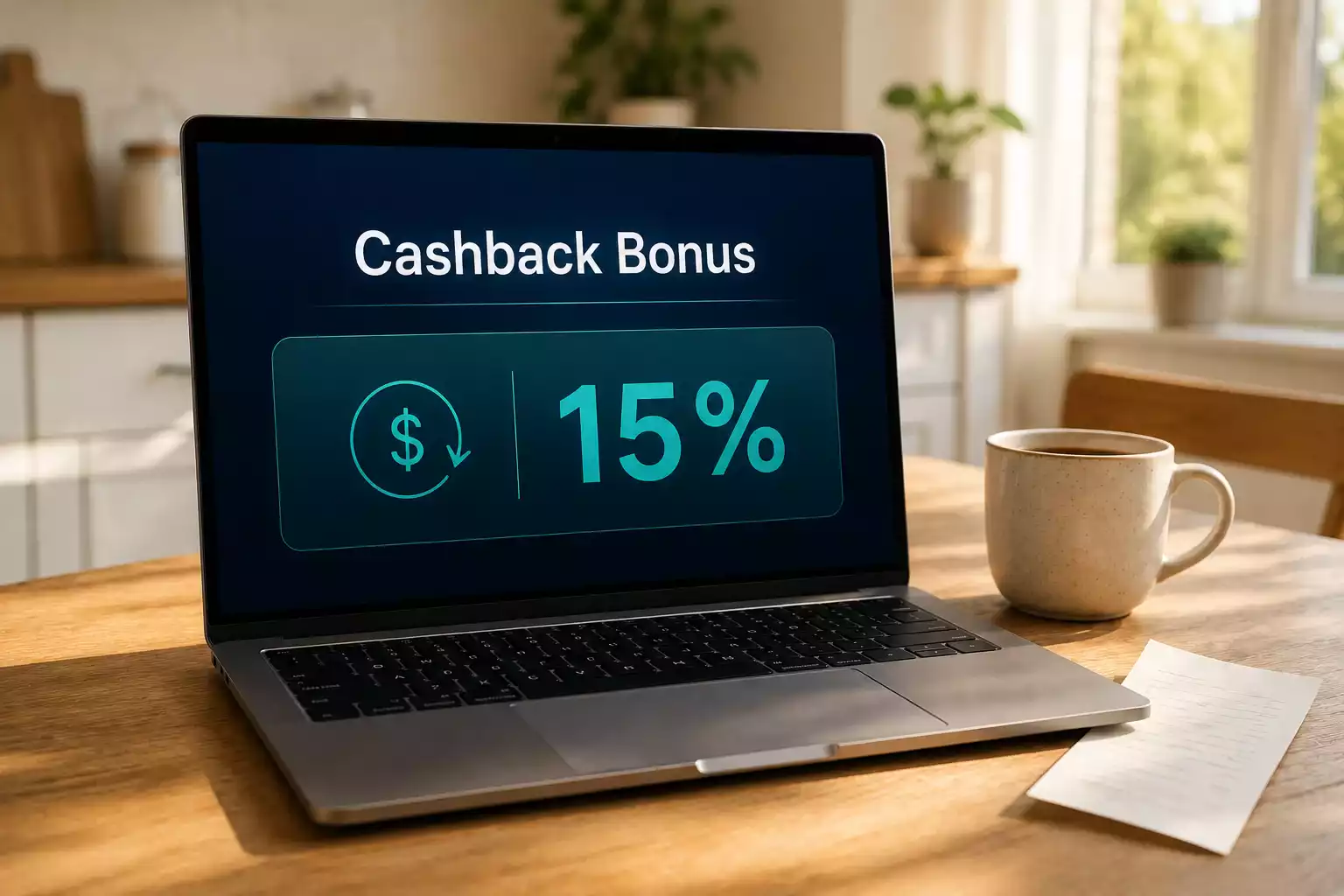
Cashback Is Not What Most Players Think It Is
A reader once told me he chose an offshore casino specifically because it offered 15% cashback. “That means I can only lose 85% of what I deposit,” he said. The logic sounds airtight until you read the terms. His cashback was calculated on net losses over a calendar week, capped at £200, paid as bonus funds with a 10x wagering requirement, and excluded losses from live dealer games — which was where he spent most of his time. His actual recovery rate on total losses was closer to 3% than 15%. The headline percentage and the real return lived in different universes.
Casino cashback occupies a peculiar space in the promotional landscape. Unlike welcome bonuses, which front-load value before the player has lost anything, cashback positions itself as a safety net — a percentage return on losses that softens the impact of negative sessions. The psychological appeal is powerful: it reframes loss as partially recoverable, which changes how players perceive risk. But the mechanics behind the headline percentage determine whether that perception has any relationship to reality.
The headline offer alongside it: the welcome bonus.
How Cashback Calculations Actually Work
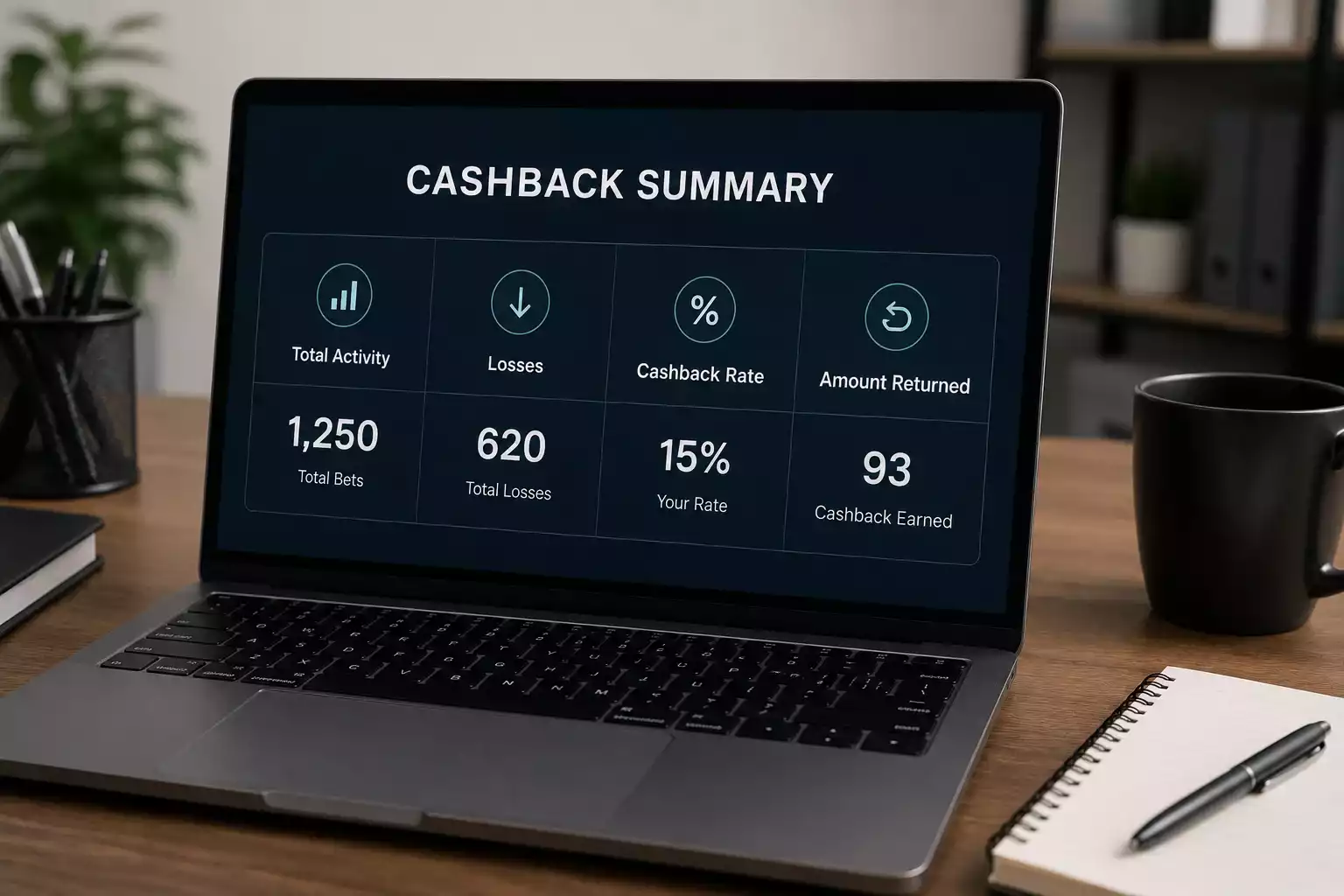
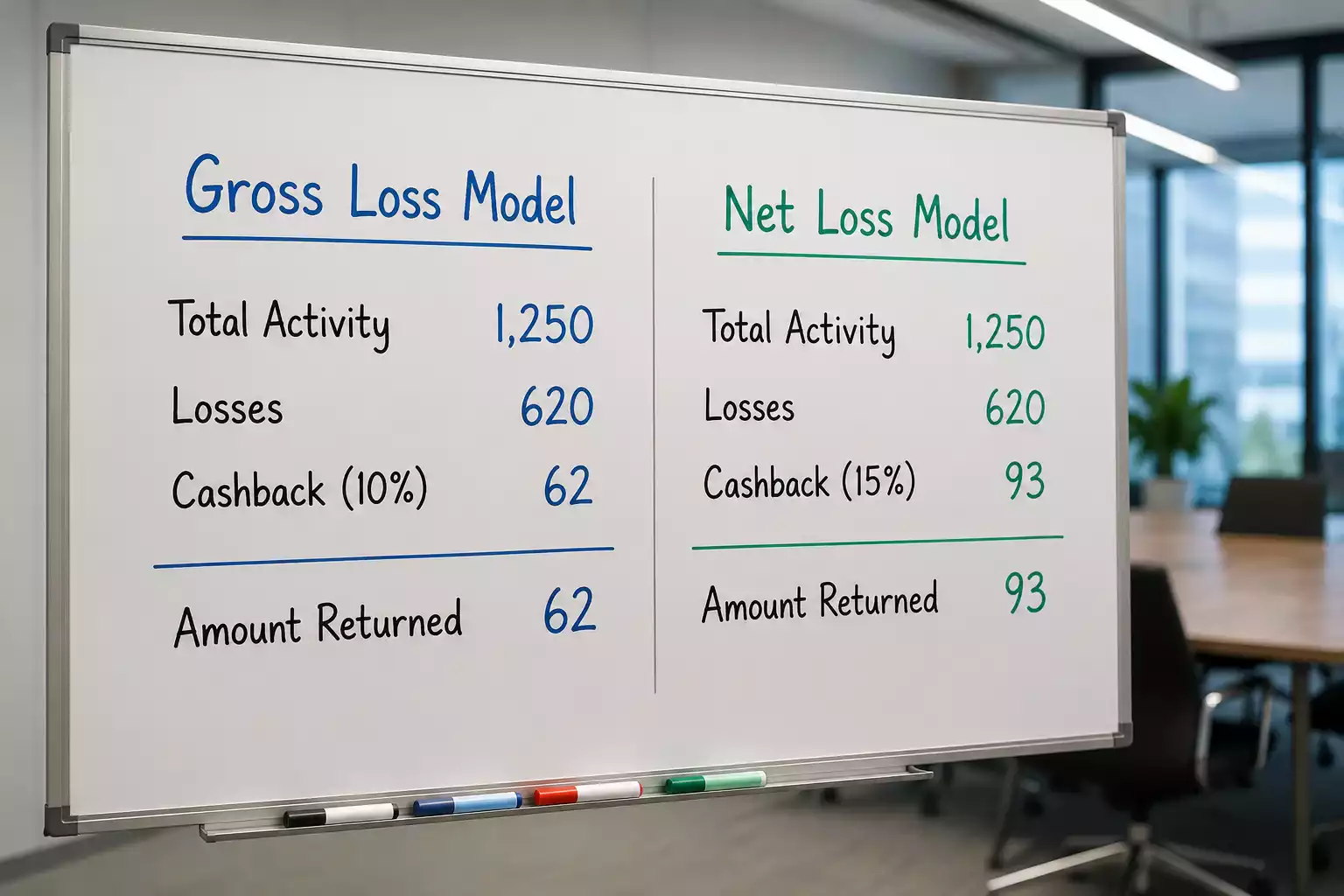
Every cashback offer I have analysed starts with the same question: cashback on what? The calculation base varies between operators and sometimes between promotions at the same operator. Some calculate on net losses — total losses minus total wins over a period. Others calculate on total wagers, returning a tiny percentage of everything bet regardless of outcome. Still others calculate on deposits minus withdrawals, a subtly different metric that penalises players who make frequent small deposits rather than single large ones.
The calculation period matters too. Daily cashback sounds more generous than weekly, but the mathematics can work against you. A daily calculation resets the loss counter every 24 hours, which means a £100 loss on Monday followed by a £80 win on Tuesday generates cashback on the Monday loss without offsetting it against the Tuesday win. A weekly calculation would net these out, producing cashback only on the £20 net loss. Depending on your play pattern, daily or weekly calculation might be more favourable — and the operator has already done the analysis to determine which structure costs them less on average.
The UK’s new x10 wagering cap on bonuses at UKGC-licensed operators applies to cashback paid as bonus funds. If Love Casino pays cashback with wagering requirements attached, those requirements exist outside the UK cap — meaning the effective value of the cashback is reduced by however much the wagering costs in expected losses. A 10% cashback with a 20x wagering requirement at 96% average RTP delivers approximately 4.6% actual value after wagering losses, not 10%.
Cashback as Real Cash Versus Bonus Funds
Here is the distinction that separates genuinely valuable cashback from marketing theatre: is the cashback paid as withdrawable cash or as bonus funds? Cash cashback — money credited to your real balance with no wagering requirements — is the straightforward version. You lose £100, you receive £10 in cash. That £10 is yours to withdraw immediately. This type of cashback genuinely reduces the house edge because it returns actual value without conditions.
Bonus fund cashback is the more common variant at offshore casinos because it costs the operator less. The cashback arrives with wagering requirements, game restrictions, time limits, and sometimes withdrawal caps — the same terms that apply to any bonus. The £10 “cashback” becomes £10 in bonus funds that you must wager £100 or more before withdrawal, losing a further expected £4 in the process. The net value of your “10% cashback” is now closer to 6% — still positive, but meaningfully less than the headline number suggests.

Ask two questions before evaluating any cashback offer: is it paid as real cash or bonus funds, and if bonus funds, what wagering requirement applies? The answers let you calculate actual value rather than assumed value. The bonus terms analysis walks through wagering cost calculations in detail, and the same methodology applies to cashback — because cashback with wagering requirements is, mathematically, just another bonus with a different name.
The Behavioural Economics of Loss Recovery
Why do casinos offer cashback at all? The direct cost is straightforward: a percentage of player losses returned, reducing the operator’s gross gambling yield. The indirect benefit is behavioural. Cashback programmes keep players active during losing streaks by providing a recovery mechanism that makes continued play feel less punishing. A player who receives 10% cashback on weekly losses perceives their effective loss rate as lower than it is, which extends session durations and — critically — encourages continued deposits after losing sessions.
Research into loss aversion, one of the best-documented biases in behavioural economics, shows that losses are felt approximately twice as intensely as equivalent gains. Cashback directly addresses this asymmetry by partially offsetting the emotional impact of loss. The result is that players with cashback active tend to deposit more and play longer than players without it, and the additional revenue generated by that extended play exceeds the cost of the cashback itself. The operator is not being generous; it is making a mathematically sound investment in customer retention.

This does not mean cashback is harmful in isolation. If you are going to play casino games regardless, genuine cash cashback reduces your effective losses. The risk is that the cashback programme changes your behaviour — encouraging larger deposits, longer sessions, or continued play during a losing streak that you would otherwise have ended. If you find yourself thinking “it is fine, I get cashback” as a reason to continue playing past your intended budget, the programme is working as designed — and that design is not oriented toward your benefit.
Comparing Cashback Across Licensing Jurisdictions
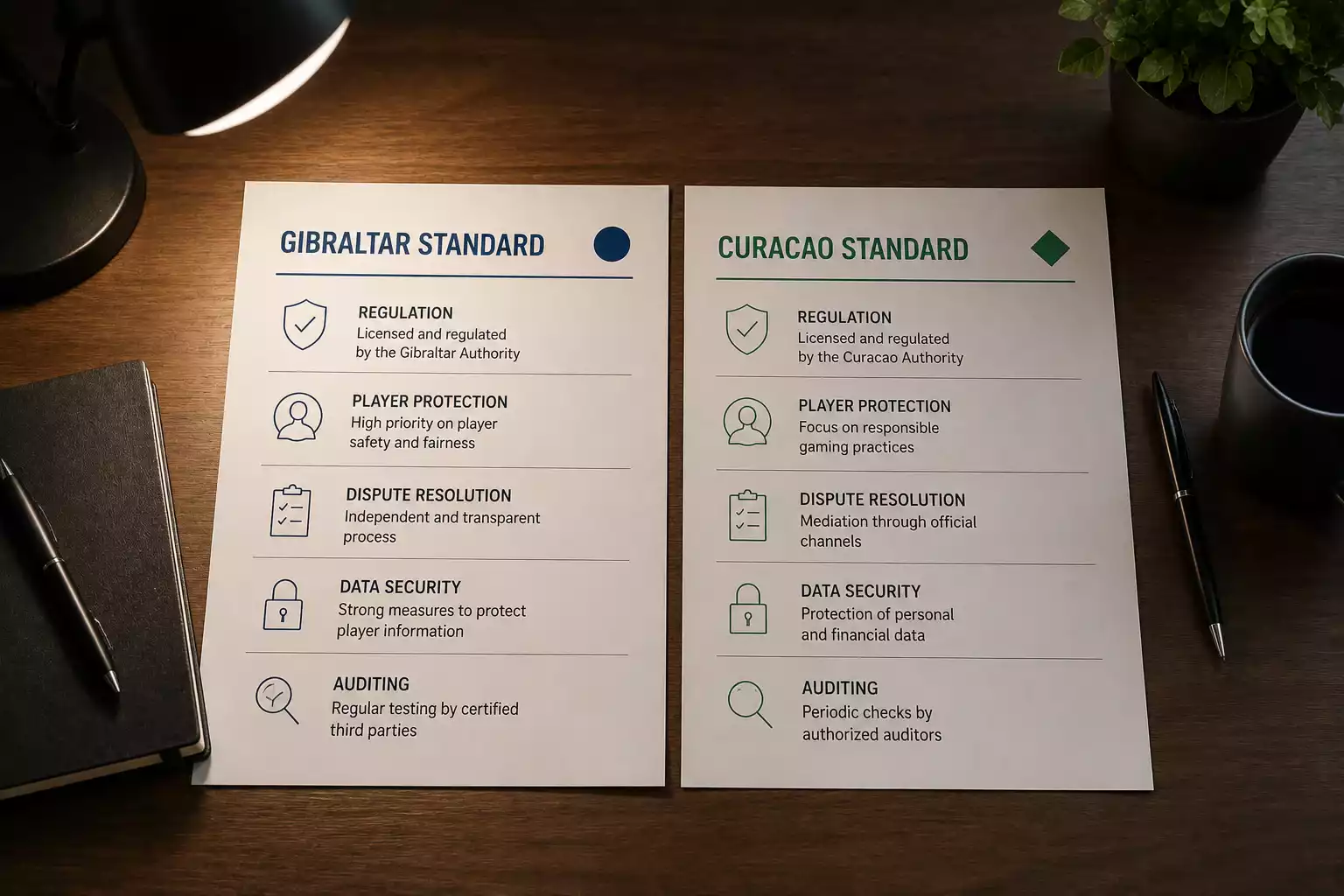
The regulatory environment shapes what cashback can look like. At UKGC-licensed casinos, the x10 wagering cap limits how onerous the terms on bonus-fund cashback can be. The prohibition on certain promotional structures from January 2026 further constrains how operators can package and market cashback offers. These regulations create a floor of consumer protection that makes UKGC cashback more transparent and more valuable in real terms.
At Curaçao-licensed casinos like Love Casino, no equivalent constraints apply. Cashback can carry any wagering requirement, any game restriction, any time limit, and any withdrawal cap the operator chooses. A 20% cashback with a 40x wagering requirement is technically legal in Curaçao but would be impossible at a UKGC-licensed casino. The headline percentage looks twice as generous; the actual value — after accounting for wagering costs — might be half as much.
The global online gambling market, valued at over $101 billion in 2026, runs on promotions like these. Cashback is one of the industry’s most effective retention tools precisely because its apparent simplicity masks its actual complexity. The players who benefit most from cashback offers are the ones who calculate actual value rather than accepting face value — and who refuse to let the promise of partial loss recovery change their deposit or session behaviour.
Is Love Casino cashback paid as real cash or bonus funds?
This varies by promotion and VIP tier. Check the specific terms of each cashback offer for whether the return is credited as withdrawable cash or bonus funds with wagering requirements. Cash cashback is significantly more valuable than bonus-fund cashback because it carries no additional playthrough conditions.
How do I calculate the real value of a cashback offer?
For cash cashback, the real value equals the stated percentage. For bonus-fund cashback, multiply the cashback amount by the expected retention rate after wagering. At 96% RTP and 10x wagering, you retain approximately 66% of the bonus value. So 10% bonus-fund cashback at 10x wagering delivers roughly 6.6% actual value.
Does the UK x10 wagering cap apply to Love Casino cashback?
No. The x10 maximum wagering requirement introduced by the UKGC in January 2026 applies only to operators holding a UK Gambling Commission licence. Love Casino operates under a Curaçao licence and is not subject to this cap, meaning its cashback terms can include higher wagering requirements.